
Camping guide to packaged food
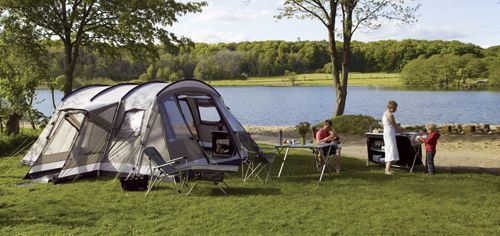
My Gurkha mentors revealed the joys and perils of campsite cooking to me on an island off Singapore. The joys focused on the smell of frying eggs and sausages; the perils lay in retrieving my spilt supper from the sandy beach. I was a Wolf Cub, then aged about seven years old.
By my early teens I had graduated to independent camping trips and (very) simple and repetitive meals of ginger biscuits dipped into baked beans heated in the tin. There was no washing up to worry about and it marked the start of many years relying on a simple single burner Camping Gaz (sic) stove. On later backpacking trips, I graduated to Springlow dried food (sadly, no more) and loved it.
Convenience foods that simply require heating are an attractive option for active campers, as they need hardly any thought or preparation. Despite the major improvements in taste and quality, I find that most need something extra (usually fresh or bulky) to round out the meal. That might be fresh veg or carbohydrates in the form of rice, pasta, noodles or trusty potatoes. Undoubtedly, packaged meals form a useful resource for campers but relying on them for a fortnight’s family holiday would prove expensive as well as rather boring. On the other hand, on backpacking trips, lightweight balanced nutritious pre-packaged meals are excellent and indeed the only practical option on longish expeditions.
Whatever camping style you embrace, a little imagination will transform ready meals. Putting awful memories of Vesta beef curries consumed as a student firmly behind me and with an open mind about the current crop of handy meals on offer, I plunged into supermarkets and outdoor shops in search of inspiration. However, despite my son’s urging for years, I cannot bring myself to regard Pot Noodles as food.
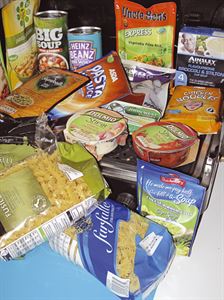
Ready meals really fall into two overall categories – wet (usually in a pouch or tin) and dry (packets). Happily, none need refrigeration so are fine stored in a box on site. Of course, there are also the sauces in glass jars and plastic tubs that just need to be stirred into pasta to make a very simple supper. The wet meals are usually pre-cooked and only require heating unless you are so hungry that you wolf them cold.
 Discussing such meals with a young nephew, he piped up: "What about tins of beans and sausages or soup?" He was quite right, of course. They probably form the easiest convenience camping food albeit tedious if relied on solely. Years of experimentation have refined our camping meals overall into simple quick options with pre-packaged options often forming the basis of tasty and filling meals. The first night is always a frozen home-cooked meal de-frosting as we travel and definitely counts as pre-packaged.
At first, I thought ’shelf stable food’ meant food that did not fall over but, of course, it means that no refrigeration is needed – ideal for camping. Freeze-drying needs heavy machinery so it is hardly an option for home experiments. It is generally regarded that freeze-dried meals rehydrate faster and retain more flavor than those that have been dehydrated counterparts.
Dehydration can reduce the weight of the food up to 90 per cent by removing water through evaporation. Some foods dehydrate well, such as onions, peppers, and tomatoes; it is something that can be tackled at home – check out Amazon for dehydrators. Ready to eat ’wet’ meals contain precooked foods in a retort pouch – a plastic and metal foil laminate pouch used as an alternative to traditional canning methods.
It is possible to prepare your own pre-packaged meals at home by pulling together dehydrated ingredients with, say, ramen noodles or angel hair pasta and packing them in quantities to suit. Let’s not forget how useful fresh fruit can be for desserts and, as a neighbour noted, eggs are great pre-packaged food.
On balance, packing a few ready meals makes for a quick, handy fallback but taking a little time to pull meals together from quickly prepared ingredients delivers good returns, particularly in economy. Then there are crisp sandwiches or… tofu and bean sprouts – naah!
Well-established and available in good outdoor shops, on offer is a range of meals and desserts (all around £4) to suit most tastes including traditional favourites such as Chicken Casserole, Beef Stew & Dumplings and Chocolate Pudding with Chocolate Sauce. New products are always being added to the range to keep up with the ever-changing trends and tastes of today’s consumers. Sealed in a durable individual foil pouch, the meals are easy to carry, simple to prepare and can be served hot, with the plus of only needing to leave the sealed pouch in boiling water for a few minutes or eaten cold.
If you love to eat well, Look What We Found! ready meals (from around £2+) tick a lot of boxes, especially if you are a fan of that home cooked flavour and care about natural ingredients, sustainability and supporting British Farmers. The team at Tanfield Food Company, who make the meals, take time and trouble to seek out the very best farmers and growers and treat their fine produce with the respect it deserves, creating delicious recipes that are packed, sealed and gently cooked in long-life (12 months) pouches that can be stored in the cupboard and snipped open whenever you are ready to make a meal. The pouches have to be emptied into a pan for heating and really need the boost of something extra – or am I just greedy? Committed to using sustainable all natural ingredients, they are really proud of the British regional producers they have found and have now created a YouTube channel to showcase them – youtube.com/user/lwwffoodchannel.
Kudrati Naturally is a range of vegetarian curries, freeze dried and full of flavor, with a suggested price of around £3.25, manufactured by Saraf Foods based in Gujarat, North West India who source ingredients from indigenous small farms in the surrounding area and do not use preservatives or additives. Many herbs and spices are added to these meals making them a tasty option for the hill or out and about. Easy to prepare, just open the packet, pour on boiling water to fill line, stir and eat; there is no waiting for the majority of meals. Backpackers can boost the meal with a carb such as a naan, pitta, roll or rice. Options range from Tadka Dhal – soft yellow lentils cooked with onions and tomato with a sprinkling of green chillies, curry leaves and aromatic spices, garnished with cumin - to Pao Bhaji – a delicious mixture of vegetables and herbs cooked in onion, ginger paste and a rich Masala. Traditionally served as a filling for breads, it is excellent with rice, potatoes and even pasta.
These meals are nutritionally complex and great for use during expeditions, long distance walks and other adventurous activities. They have been created to offer the right balance of energy and carbs and the best seller – Beef and Potato Hotpot – packs a hearty 561 kCal per pouch priced at around £5. Quick and easy to prepare you literally open the packet, fill with water and eat from the packet. With a range of wide and varied options, you can choose from 31 dishes including breakfasts, soups, main meals, vegetarian options and desserts.
Mountain House is the premier brand of freeze-dried food in the USA, and offers hearty, filling meals that I have been enjoying for years. Two new options this year are already a hit with me. The breakfast of Scrambled Egg with Ham and Potato (£4.99) is a great fuelling up for the day whilst Mediterranean Vegetable Pasta (£4.99) offers pasta shells with crunchy, fresh veggies - sweetcorn, onions, green beans, bell peppers, brown lentils and black olives - complemented by a rich creamy sauce with herbs and seasonings. Other options include Spag Bol, Chilli Con Carne & Rice, Chicken Tikka & Rice and Sweet & Sour Chicken.
A backpacking and family camping favourite, these handy tube options (varying prices from £1+) fall into the category of ’semi-packaged’ as they are so versatile. Primula Cheese is made by taking a blend of natural Gouda and Cheddar cheeses, which are melted with water, butter, milk powders and emulsifying salts. Then it is pasteurised (cooked to 100C and held there for 5 minutes) which means that it will have a long shelf life. Once opened, they should be refrigerated but with us there is never any left.
QUICK & EASY CAMPERS’ SUPPER
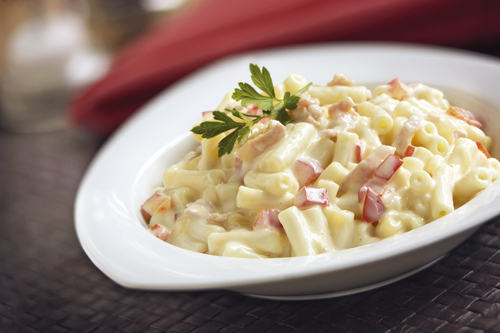
Ingredients:
150g Tube Primula Cheese with Ham
Macaroni - amount to suit need!
Bring a large pan of boiling water to the boil. Add the macaroni and cook until tender; drain when cooked.
Heat the olive oil and add the garlic, onion and red pepper. Sauté until tender. Stir in the Primula. Stir in the macaroni and gently heat until warmed through. Add the ham and serve at once.
This is a curious category of eats but they are handy for emergencies such as being trapped in the car by snow. In reality, they are not really needed for recreational camping but it would be fun to experiment.
Useful sources for grub to power your legs
Read more handy camping guides here.
Next Shows

The Big Land Rover Fest 11th - 12th July 2026
Experience The Big Land Rover Fest – a weekend of off-roading, live music, club displays and family fun at Newbury Showground, 11–12 Ju...

The Norfolk Motorhome & Campervan Show 17th - 19th July 2026
Join The Norfolk Motorhome & Campervan Show, 17-19 July 2026, for the Out & About Live Summer Party! Explore motorhomes, live demos, an...

Retro Festival 7th - 9th August 2026
Retro Festival celebrates timeless hits, vintage vehicles, fashion shows, and fairground fun.