
Green camping: Be kind to the planet when you enjoy the outdoors

Eco camping
The good old British camping holiday is more popular than ever. But what about the impact all this has on the environment and our beautiful countryside?
We’ve found some of the top ways to plan an eco-friendly camping trip so you can enjoy the great outdoors without causing it harm.
Eco-friendly kit
Camping is generally an environmentally friendly activity, but there are still things to consider when it comes to kit.
Most camping gear is produced in factories in the Far East, so there are obviously potential issues in terms of the impact on the environment, both during the production process and in transporting the products to Europe.
For the time being these issues are unavoidable, but there are ways to offset the impact. One approach is to look around for tents and camping gear that use recycled materials.
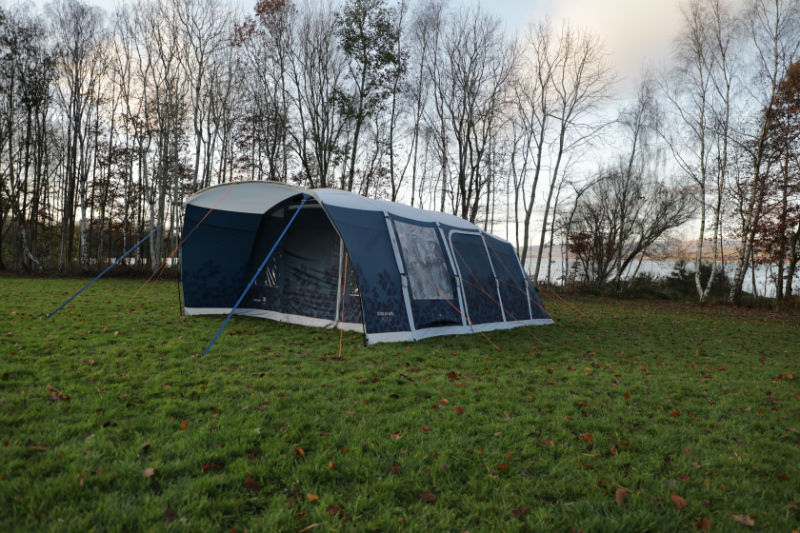
For example, Vango has teamed up with the National Trust to launch an eco-friendly camping collection made out of recycled plastic bottles.
The bottles used in the tents and sleeping bags have been salvaged from waterways, streets and landfill and it is expected that almost 300,000 will be repurposed in the first year of the collaboration.
Biodegradable tent pegs are another inexpensive way to help the environment.
They are made of potato starch, so if they get inadvertently left behind on the campsite, there will be no trace of them after a few months. This is a refreshing alternative to the ugly and unsightly rusty old pegs that can litter campsites and countryside at the end of a summer holiday.
And we are assured that they only begin to decompose after months in the ground, so no danger of them suddenly melting away in the middle of a downpour!
Another good example of the kind of product to look out for is US-based CamelBak’s eco-friendly Repurpose range of bags.
The collection includes a 20-litre backpack, that is made from 50% recycled materials, including 11 recycled plastic bottles.
Outdoor clothing can also boast good eco-credentials. The Stockton rain jacket from Kathmandu is highly sustainable – recycled face fabric, polyester insulation and inner lining.
And it’s not just materials – the bio-based membrane used in the face fabric is constructed sustainably using less water.
Single-use disposable products are increasingly becoming a no-no and everyone’s on the lookout for alternatives. Never use disposable plastic cutlery or paper plates on camping trips.
There are lots of bespoke camping options available, including crockery made from sustainable materials like bamboo. Outwell’s Lotus dinner set is durable and includes plates, bowls and tumblers.
An even more eco-friendly approach is to bring crockery and utensils from home.
For food storage, use Tupperware containers rather than cling film or foil. If you’re out on the hills, take reusable drink bottles and fill up before you set off, so you can avoid plastic bottled water. Reusable beeswax wraps are good for packed lunches.

Reuse, repair, recycle
When camping gear gets damaged, the temptation is simply to bin it and buy new.
Sometimes that will be the only option available, but often there are other ways that don’t result in gear ending up in landfill. Rips and tears in tent fabric can be patched up or sewn back together and even broken poles can be repaired or replaced.
Punctured air tubes are easily repaired and the major manufacturers all supply replacement tubes if necessary.

If doing your own repairs seems daunting you could turn to a repair service. Vango operates aftercare service centres, where you can send your damaged tent to be fixed, whether it's broken poles or a torn flysheet.
Needles & Pins UK specialises in producing covers for everything from large aircraft to garden furniture, and has now moved into fixing camping equipment.
Director Carole Champion says, “In the spirit of reusing and recycling, we’re offering our expert skills to campers to repair their tents or ground covers, so they can be used again for many more adventures to come. We can patch up any holes, repair seals, fix zips, repair windows in awnings, replace old worn tie downs and replace lost stowage bags.”
Stay local
Cars are to blame for a large amount of our greenhouse gas emissions, so choose a camping spot closer to home to help reduce your carbon footprint.
The fewer miles you clock up, the less harmful emissions your car will be belching out into the environment. And you’ll appreciate spending less time cooped up in the car, too.
If you’re going with a big group, take one large car, or two smaller ones, rather than everyone travelling in their own vehicle.
Try to pack as efficiently as possible so you use less fuel on your journey. And if you’re still concerned about the amount of CO2 you’re producing, calculate the emissions created through your journey and offset them through a carbon offset programme.
Shop local
Try to avoid big supermarkets and pick up your supplies locally. If the campsite has a well-stocked shop, do your food shopping there.
It might be a little more expensive, but you’re not driving so you’ll save a bit on fuel.
Campsite shops usually stock local produce, so that addresses the food miles issue, too.
Almost as good, is to do your shopping at farm shops. Not only does it help the local rural economy, but the produce is usually tastier and they use less packaging than the supermarkets.
As well as being being more environmentally friendly, this means less rubbish for you to dispose of later.

How to dispose of waste
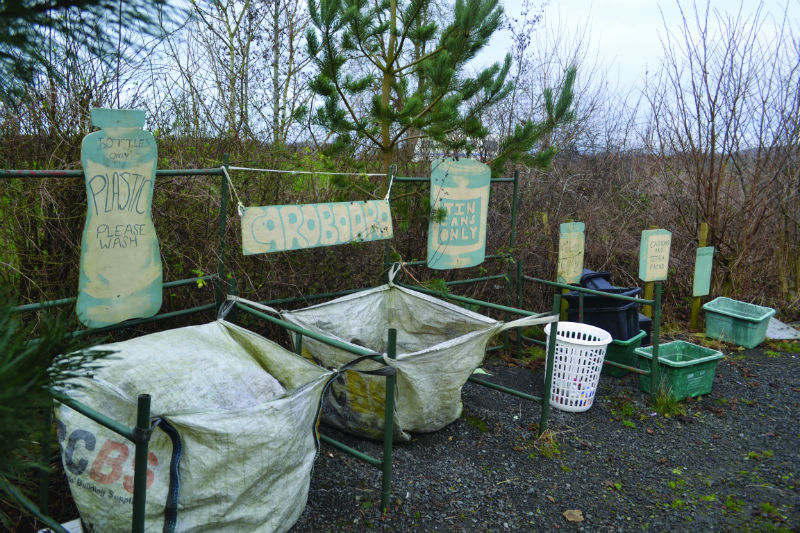
Speaking of getting rid of rubbish, you should have at least two bins in operation at your tent, one for landfill and the other for recycling.
Most campsites have bins for recycling and general waste, but if the one you’re staying on doesn’t then take your rubbish with you and dispose of it properly at home or at a local recycling centre.
Any packaging for new camping gear should also go with you, as well as damaged kit that can’t be reused.
Rent-a-tent
Another way to go green is to rent your tent rather than buy – especially if you’re only expecting to go camping once a year.
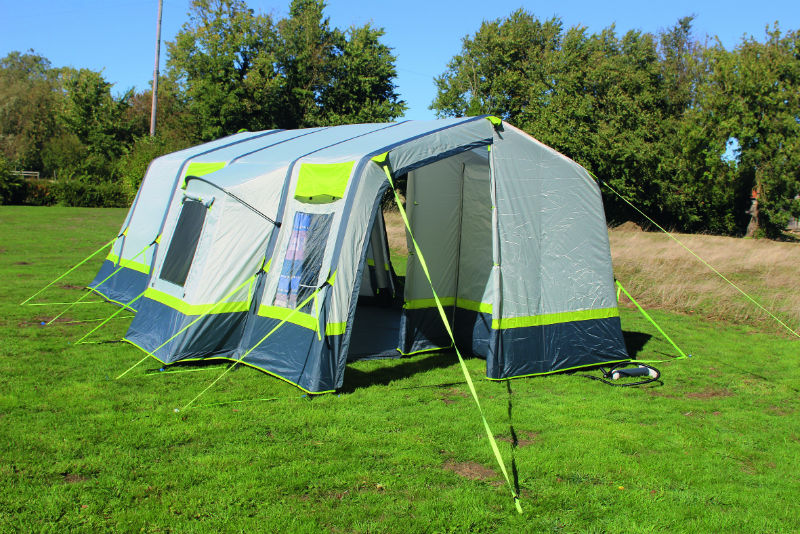
UK camping brand Olpro’s Loan & Go rental service allows customers to pay to borrow any one of Olpro’s tents or awnings for up to eight people.
The Knightwick 2.0S tent, for example, can be rented for £35 over three days while the five-berth Home tent costs £170 for the same time period.
Tentshare is another initiative allowing tent-owners to hire them out to people who want to go camping. You can hire a tent from the website (tentshare.co.uk) or hire out your own tent and make money.
The idea is to address the “single use” culture of camping. Fewer cheap tents would be bought, only to be used once, then stored in a garage or loft until they are eventually thrown away.
As part of its tie-up with Vango mentioned previously, the National Trust is setting up pre-pitch camping options at some of its campsites, including Wasdale in the Lake District, Dolaucothi in Wales and Highertown Farm in Cornwall.
Tents and gear will be set up in advance of your arrival, ready for you to move straight in.
Similarly, Lee Valley Camping has teamed up an equipment hire business, to provide pre-pitched camping packages.
Solar power
In an ideal world we would get rid of all our technology for the duration of a camping trip, but that’s probably unrealistic.
We can still be environmentally friendly even when using our gadgets.
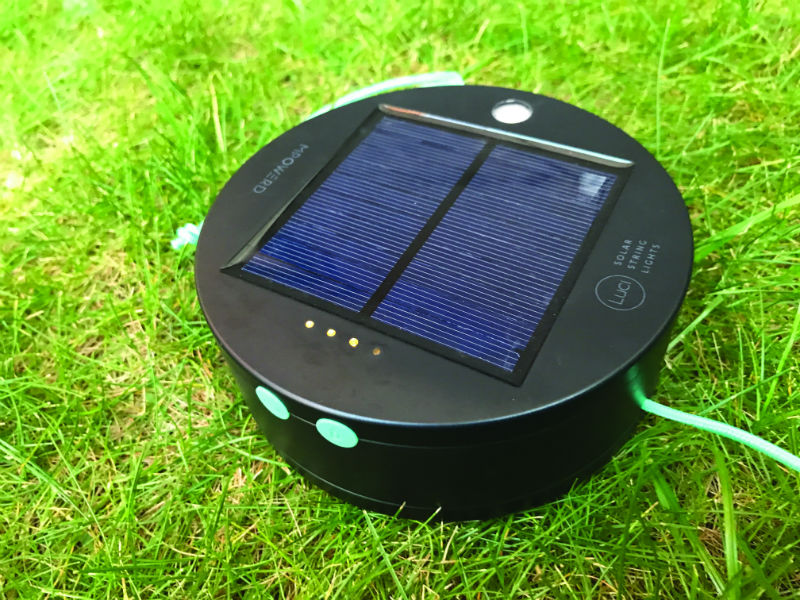
Solar panels or solar-powered chargers are a great way to recharge batteries on phones and tablets and reduce your use of electricity.
For lighting, rather than hooking up to the grid, use rechargeable batteries or solar chargers wherever possible.
Leave no footprint
Whether you’re wild camping or hillwalking, be respectful to the environment. Take your rubbish home with you, stick to the paths and always leave these beautiful locations exactly as you found them.
When you stray off the trail, you risk damaging plants and disrupting the local wildlife.
Don’t let children pull at plants or get too close to wild animals and don't be tempted to take stones, sticks or plantlife home as a keepsake.
Use kinder chemicals
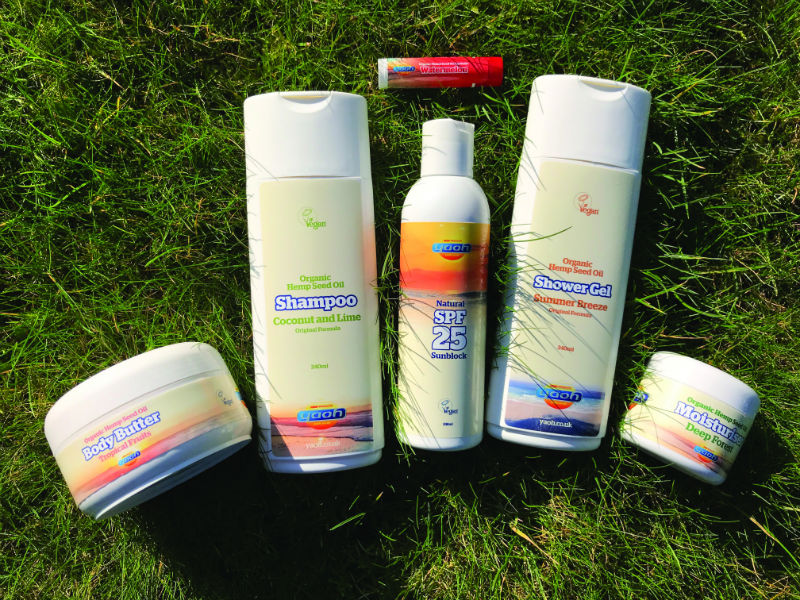
The products that you use during your camping trip can have a negative impact on the environment in the long-term, so, if possible, try to use natural or organic alternatives.
That includes cleaning and care products but also extends to shampoos, soaps, sunscreen and insect repellent.
When you’re considering what to buy, take a look at the ingredients list and opt for products with all-natural, organic contents and avoid those that contain nasty chemicals like parabens.
Kampa’s range of environmentally friendly camping cleaning fluids come in bottles with spray attachments that can be refilled from 'eco pouches' when they run out, meaning 80% less packaging and 15% less energy to produce.
Chemicals that are harmful to both the environment and to humans have also been removed along with the horrible chemical smells that are so often associated with cleaning liquids.
Praise, too, for Nikwax and Storm, who produce proofing and cleaning treatments for outdoor gear. Both realise how important the environment is to their customers and are taking action to address those concerns.
Nikwax products are water-based and contain no harmful PFCs. The company made a commitment to ensure all of its new bottles would be made from recycled plastic by the end of 2020 and was ahead of target before the end of last year.
Storm has decided to ditch most of the plastic in its packaging and instead use easily recyclable aluminium. Storm’s aluminium range is now available in a range of care kits for tents, clothing and footwear.
Choose a green site
If you want to fully embrace the eco-friendly camping lifestyle then you need to choose a campsite that shares your commitment to looking after the planet.
The good news is that the UK has hundreds of sites with green credentials and environmentally friendly facilities, such as recycling and composting areas and alternative fuels for the amenities. Some sites even offset the carbon you use to get there.
Many of these are small and have limited facilities, so won’t suit everyone’s needs but there are many larger campsites and holiday parks doing their best to tackle environmental issues, too.
More than 560 holiday parks and campsites were recognised in the most recent round of the David Bellamy Conservation Awards. Wildlife safaris, bird hides, nature trails, butterfly gardens, species-rich woodlands and beautiful wildflower meadows are just some of the features on award-winning winning parks.
Big campsites have also invested millions of pounds in environmentally friendly projects.
Recently, Ladram Bay Holiday Park, near Budleigh Salterton in East Devon, announced a £300,000 green energy project, installing a state-of-the-art solar energy system across various buildings in its grounds. The aim is to prevent 171 tonnes of carbon dioxide from entering the atmosphere every year.
It’s just the latest in a series of eco-friendly measures at the site, including a solar-powered litter bin, which crushes waste by up to 90%, new energy-efficient boilers, and an extension of the site's ban on single-use plastics.
Campers also took part in an initiative to retrieve plastic waste washed up on its beach.
The growing total of discarded plastics gathered was shown on a special display board near the beach path.

Join the Out & About Live family
Get the latest news and exclusive offers direct to your inbox
Discover your inner outdoors with Out & About Live. For over 20 years we have provided the very best advice to motorhomers, campervanners, caravanners and campers – whether you are looking for travel advice, the very best so sign up to our FREE email newsletters so you don’t miss out any longer.
Next Shows

Retro Festival 7th - 9th August 2026
Retro Festival celebrates timeless hits, vintage vehicles, fashion shows, and fairground fun.

The Western Motorhome & Campervan Show 21st - 23rd August 2026
Join The Western Motorhome & Campervan Show in Malvern, 21-23 August 2026, for live country music, 450+ motorhomes, and a weekend of ca...

The South West Motorhome & Campervan Show 11th - 13th September 2026
Camp in Somerset’s scenic Bath and West Showground for The South West Motorhome & Campervan Show, 11-13 September 2026, with expert adv...