
Camping skills: how to pitch an inflatable tent
Words and pictures by Iain Duff
Page contents
Introduction
So you’ve just bought a fantastic inflatable family tent for a snip from your local camping shop or bagged a bargain on eBay. But before you load up the car and head for a seaside campsite, we’d recommend a dry run closer to home
Tents have become a lot more user-friendly to put up in recent years, but if you have the space, a practice session on the back lawn, or even in a nearby park, could save a lot of hassle on your maiden trip.
A couple of practice pitches with your new tent before you set off will make the real thing go much more smoothly when you arrive on site.
Set aside a sunny Saturday afternoon for your practice session, rope the kids in, too, and it will usually turn into a bit of an impromptu team-building exercise.
Make an event of it: light the barbecue, get the neighbours round and have fun doing it and you’re much more likely to remember how to put it up when it comes to the real thing.
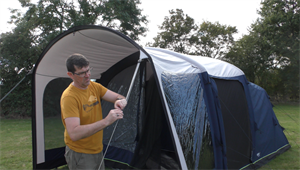
For this practice run, we popped along to Attwoolls in Gloucestershire to pitch Outwell’s Hayward Lake 4ATC – an ideal weekend tent for a small family. It’s a straightforward inflatable tunnel tent, with a front canopy, living area and sleeping compartments at the rear.
Thanks to Clive and Simon from Outwell for doing all the hard work!
Most manufacturers have detailed instructions on their websites and even a video to guide you through the pitching process, so make sure you follow these thoroughly and use all the available advice.
Pitching your inflatable tent
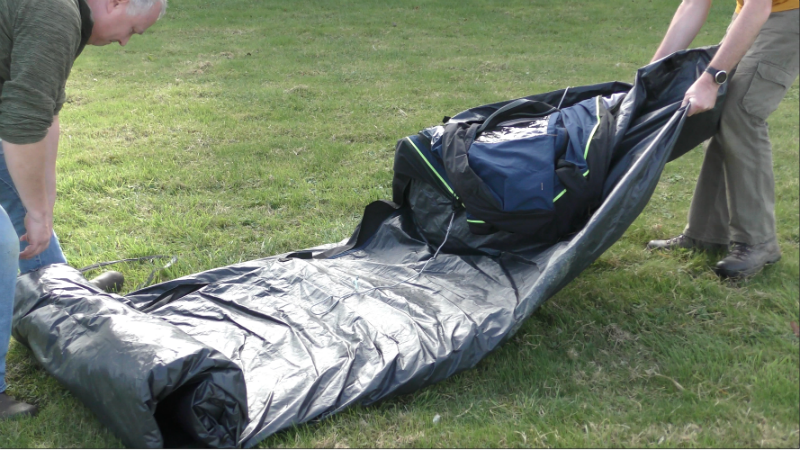
1. Take the contents out of the bag and check you have everything you need: in this case, we have the combined outer tent, inner tent and groundsheet, pump, pegs and the steel poles for the front awning.
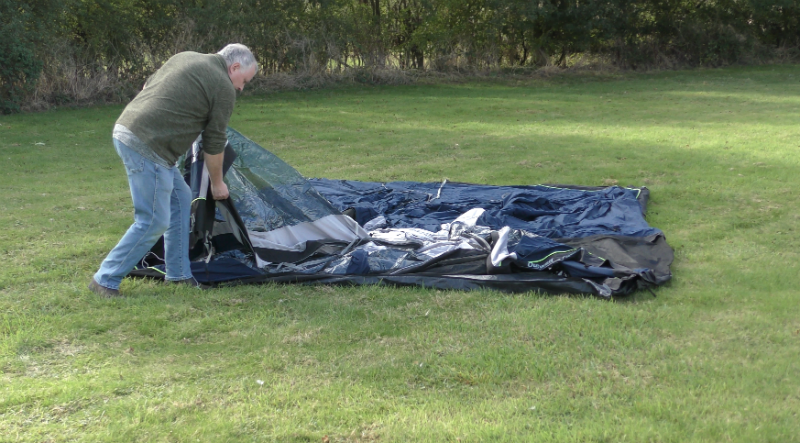
2. Unfold the tent, find the door, and place it where you want it. Lay it out flat with the door facing in the opposite direction of the prevailing wind.
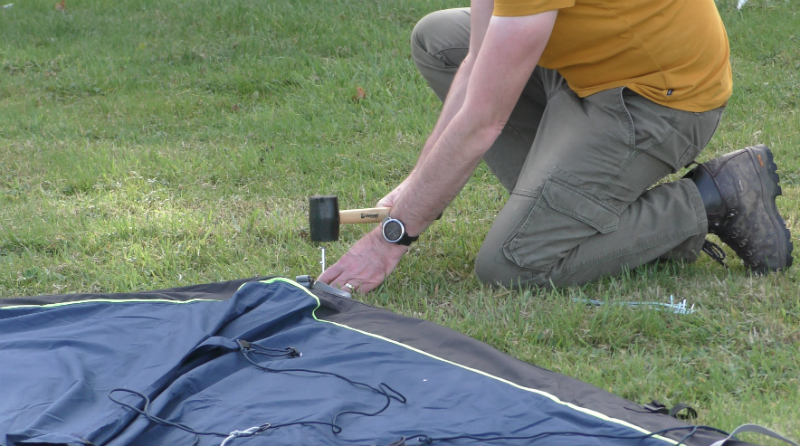
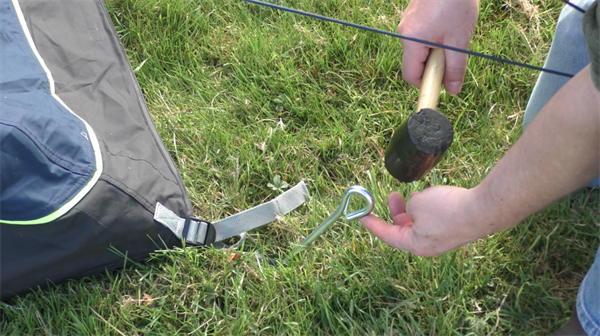
3. Hammer down the four corner pegs to stop the tent blowing out of position if the wind suddenly picks up.
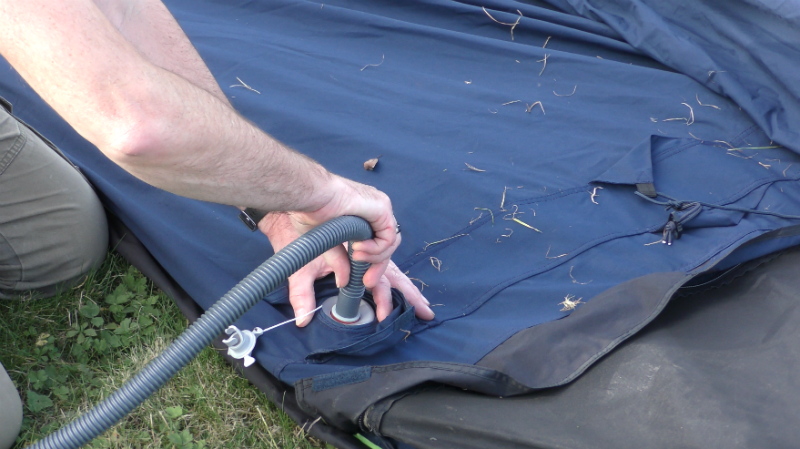
4. Find the valves and attach the pump. Different brands will have them in different places on the tent. Some have a single valve, others have one for each beam. Depending on your model, the pump fitting will either screw in, click in or push into the valve. Check that the fitting on your pump matches the valve on the tent.
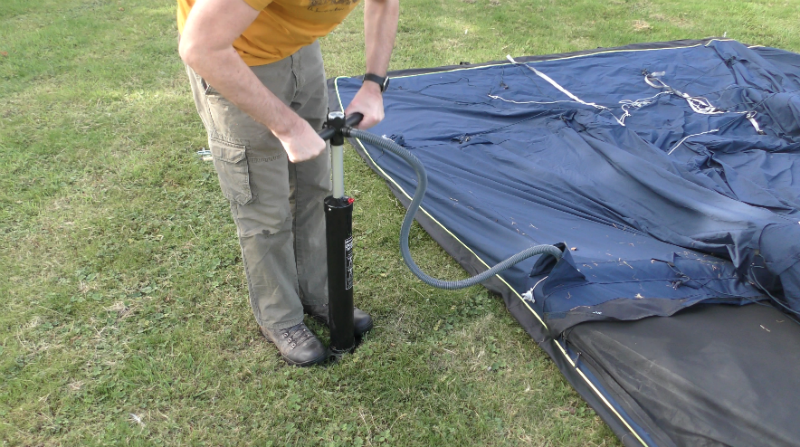
5. Start inflating. Make sure you don’t pump too much air into the beam – ideally use a pump with a pressure gauge..
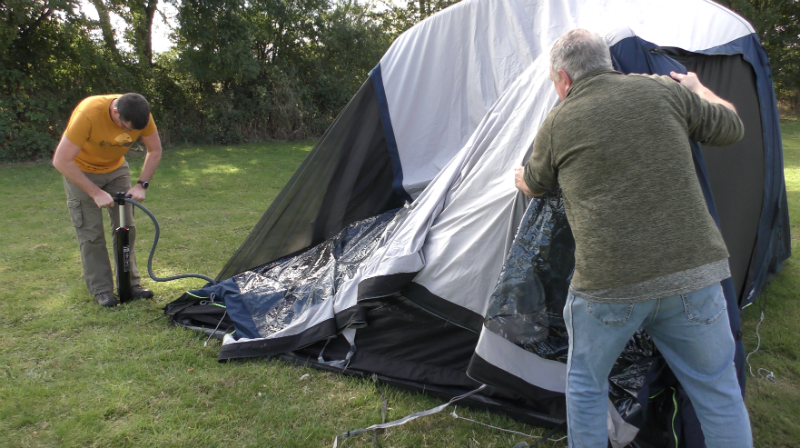
6. Push the beams into shape. As the air fills the beams they will need a little help to form into the correct shape. If it’s a bit breezy you’ll need a helping hand here – especially if you’ve got a large or heavy tent.
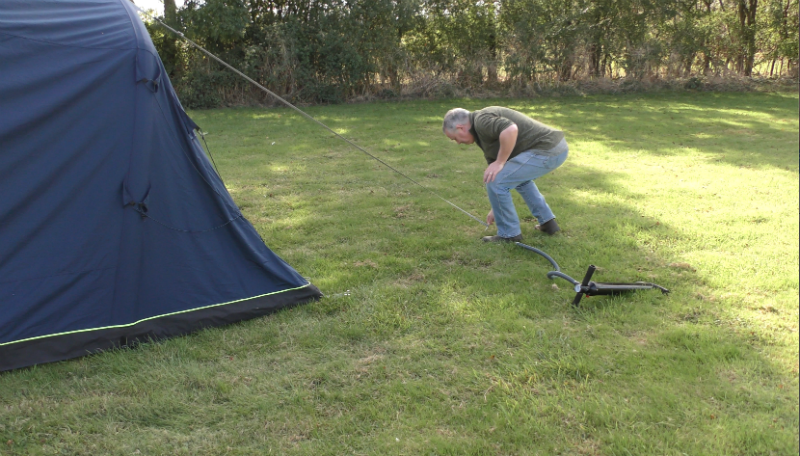
7. Peg out the groundsheet and the side walls, checking for creases as you go along, then unravel the guylines and peg them loosely around the tent before tightening them up.
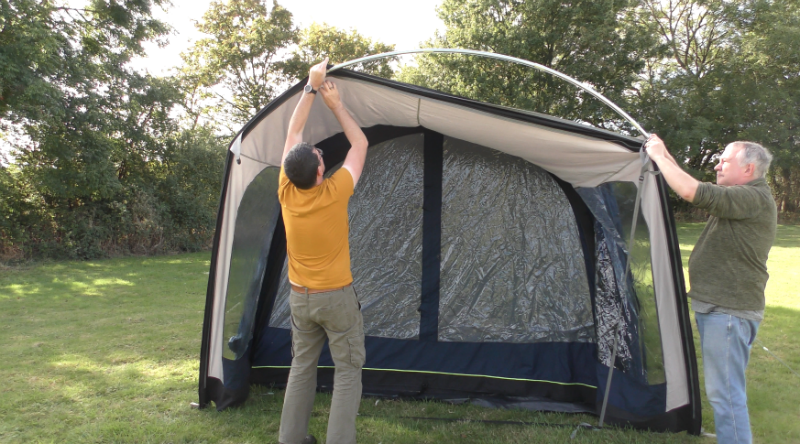
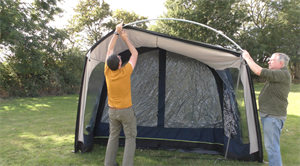
8. Insert any poles for canopies then lift into position and peg out the storm straps. Get the tent as taut as possible.
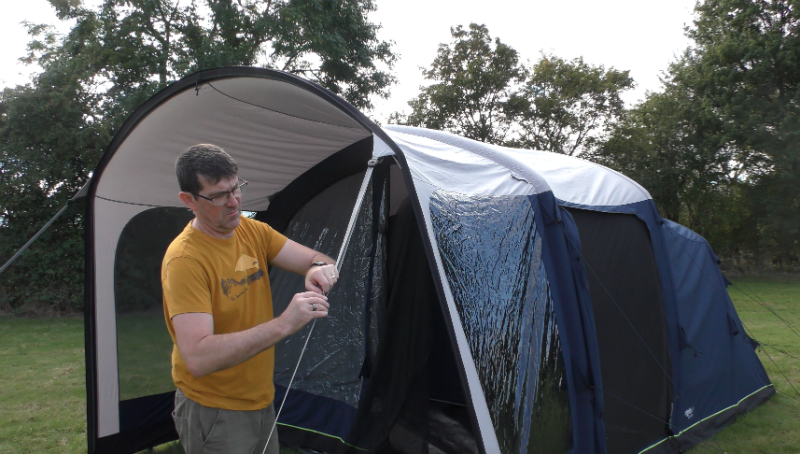
9. Check the guylines and storm straps again to make sure the tent is level and the doors can all open freely. Don’t over-tension the guys and peg straps as the tent needs some leeway to move with the breeze.
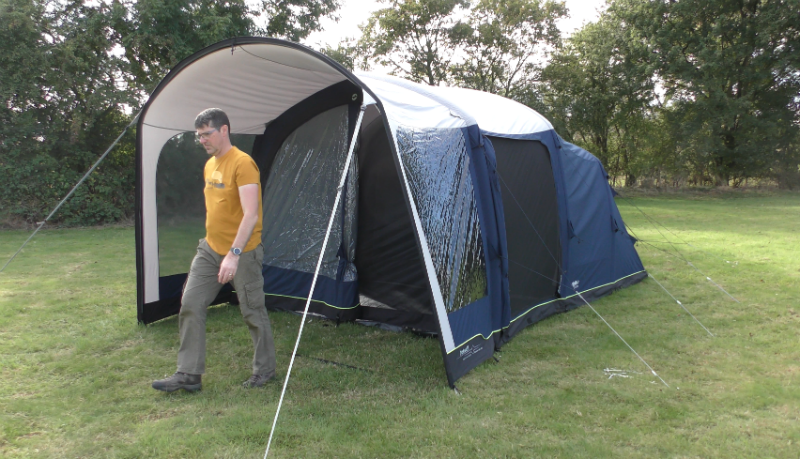
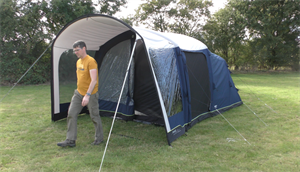
10. Voila! Fully erected and ready for moving in, around 15 minutes after starting. It's time to start enjoying your camping experience.
Pitching an inflatable tent video
Watch our video guide to putting up an inflatable family tent..
Finished reading?
Want to learn more great camping skills ?
Our "Camping skills: learn how ti be an expert camper" is full of great kit buying advice.
Next Shows

The Big Land Rover Fest 11th - 12th July 2026
Experience The Big Land Rover Fest – a weekend of off-roading, live music, club displays and family fun at Newbury Showground, 11–12 Ju...

The Norfolk Motorhome & Campervan Show 17th - 19th July 2026
Join The Norfolk Motorhome & Campervan Show, 17-19 July 2026, for the Out & About Live Summer Party! Explore motorhomes, live demos, an...

Retro Festival 7th - 9th August 2026
Retro Festival celebrates timeless hits, vintage vehicles, fashion shows, and fairground fun.