
Trail Tailgate Air Driveaway Awning Review


Iain Duff Content Editor: Campervan/Camping
Iain Duff Content Editor: Campervan/Camping
Description
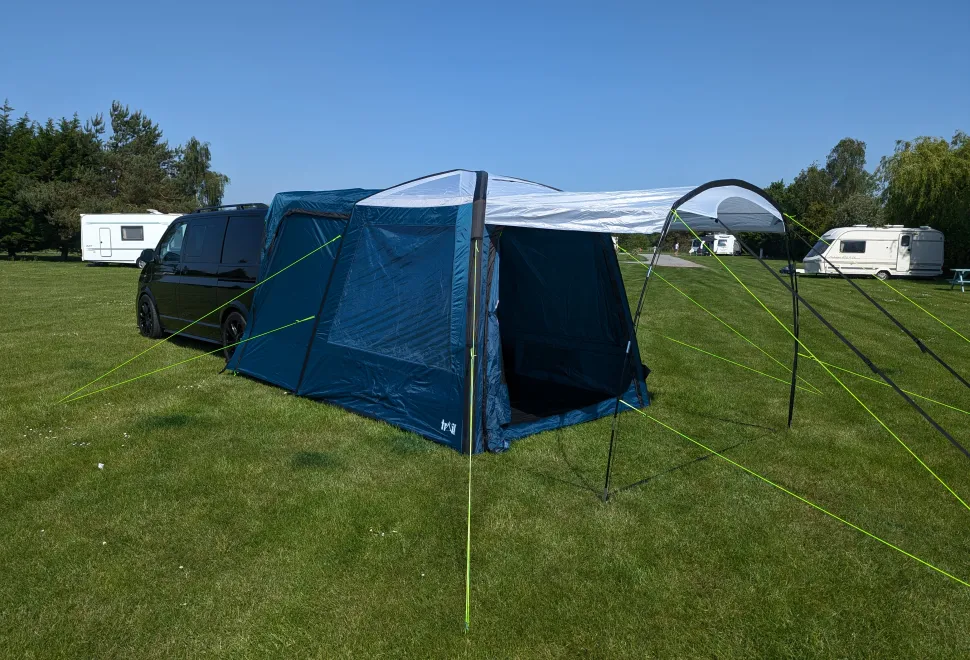
The Trail Tailgate Air Driveaway Awning is a budget-friendly inflatable awning designed for campervans and SUVs.
Full Review
The Trail Tailgate Air Driveaway Awning is a budget-friendly inflatable awning designed for campervans and SUVs. At under £300, it’s half the price of some of the offerings from better-known brands, but the big question is: can something at this price actually compete with the more established companies?
So, is the Trail Tailgate awning actually good value for money… or just cheap?
What is a driveaway awning?
First things first – if you’re new to campervanning, you might be wondering what is a driveaway awning?
Well, in simple terms, it’s an extra room that attaches to your campervan. So instead of living entirely inside the campervan, you’ve now got extra covered space for cooking, eating, storing gear, getting changed – or even sleeping.
The “driveaway” part means you can disconnect the campervan and leave the awning standing on your pitch while you head off for the day. That’s especially handy on campsites where you don’t want to lose your camping spot.
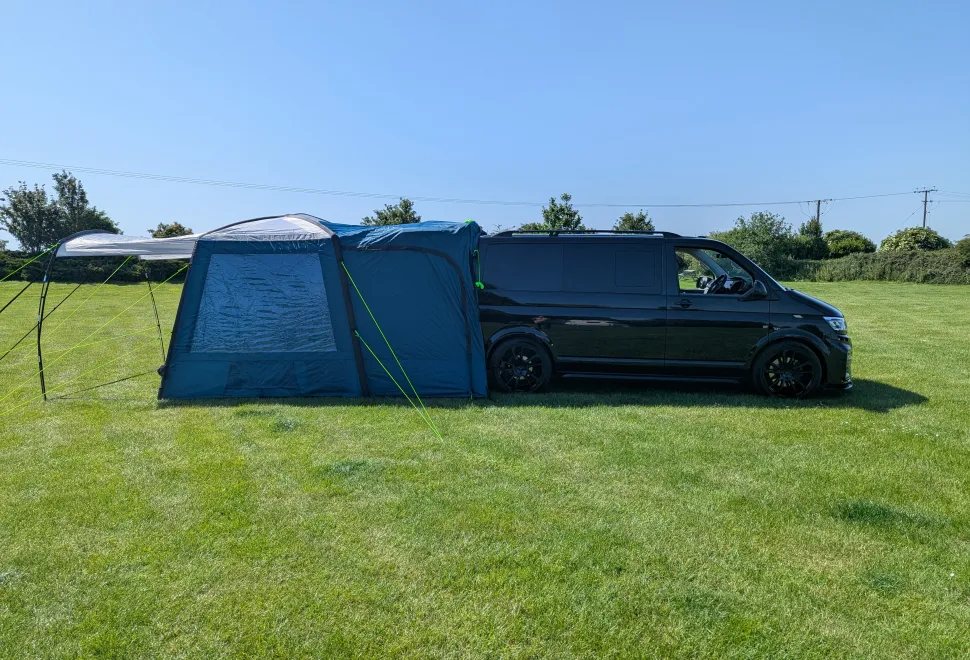
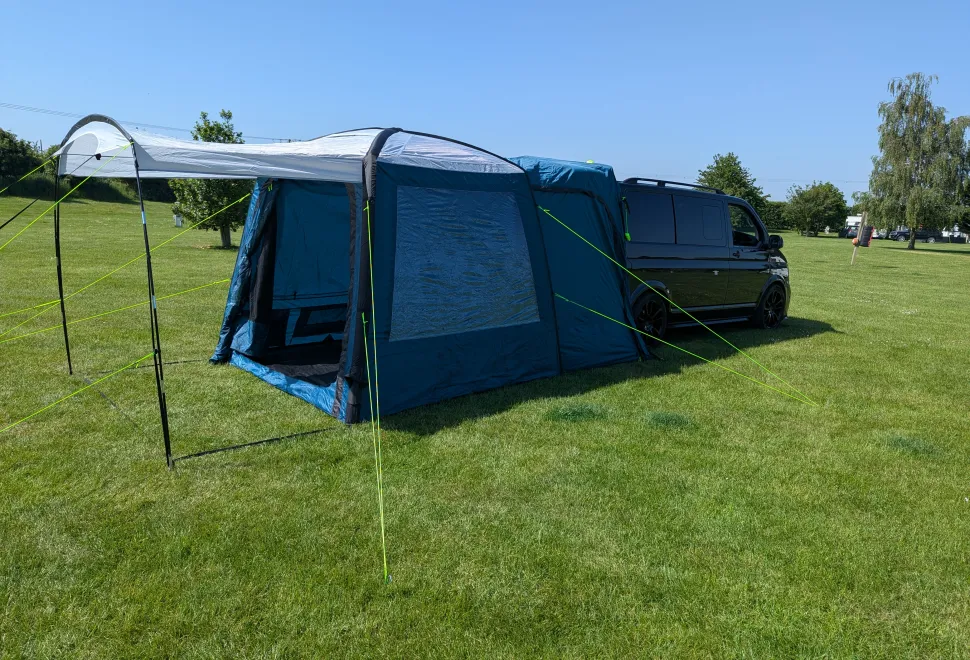
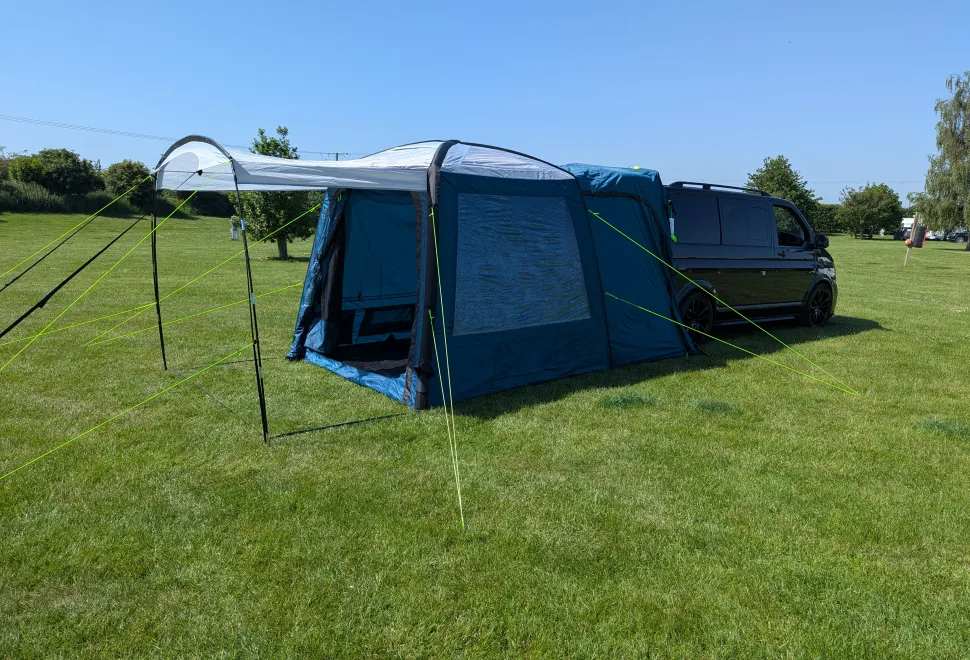
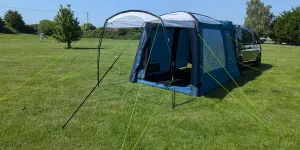
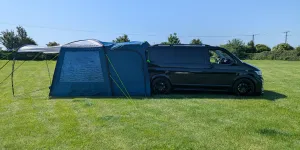
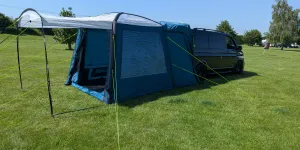
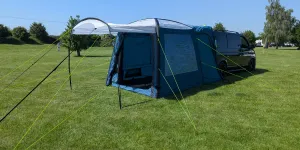
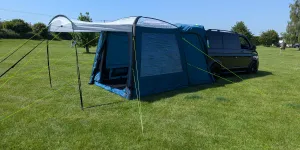
This particular model is a tailgate awning which means it is designed to fit onto the rear of the campervan rather than over the side sliding door.
How much is the Trail Tailgate Air Awning?
One of the biggest selling points of the Trail Tailgate Air Awning is the price. At the time of writing, it comes in well below a lot of the big-name inflatable driveaway awnings on the market – and Trail seems to have sales on a fairly regularly basis as well. Currently it’s available on the Trail website for £297.49, more than £150 off the RRP. Normally when something’s significantly cheaper than it should be, there’s usually a catch. Sometimes the fabric feels thin or the zips feel flimsy, but actually first impressions here are pretty decent.
The fabric feels more robust than you might expect for the money, and it has a 5,000mm hydrostatic head rating, which basically means it should cope very well with British weather.
You also get UPF50+ sun protection, really useful in hot summer weather, taped seams and inflatable air beams, rather than traditional poles.
Features and design
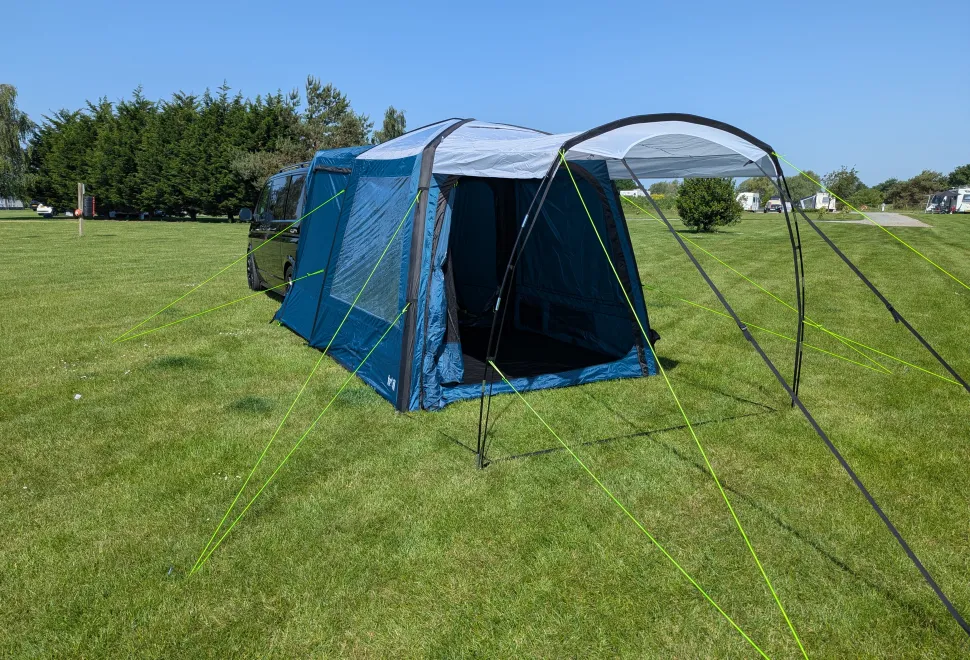
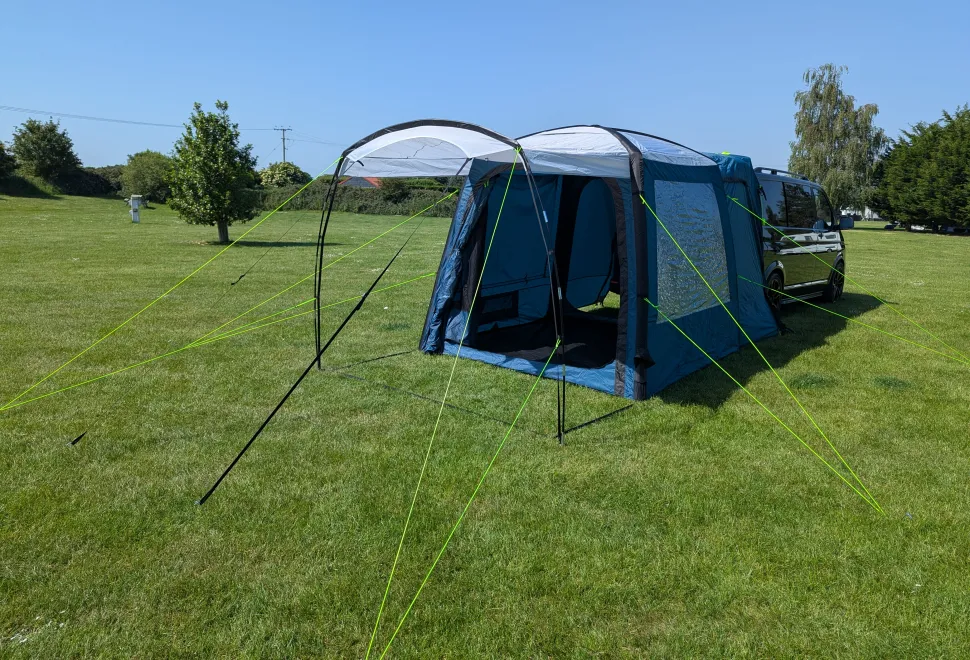
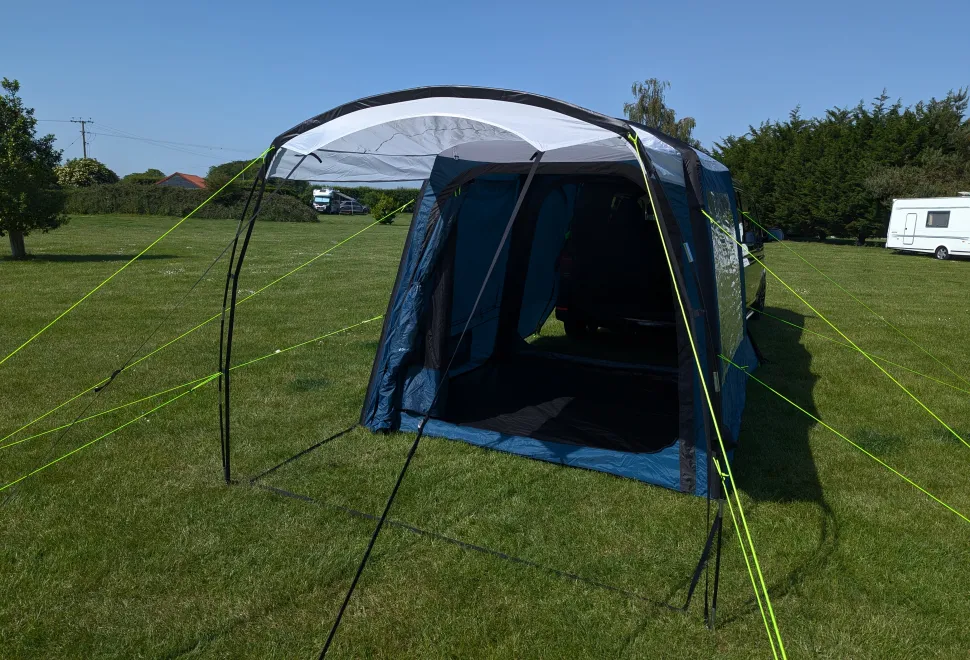
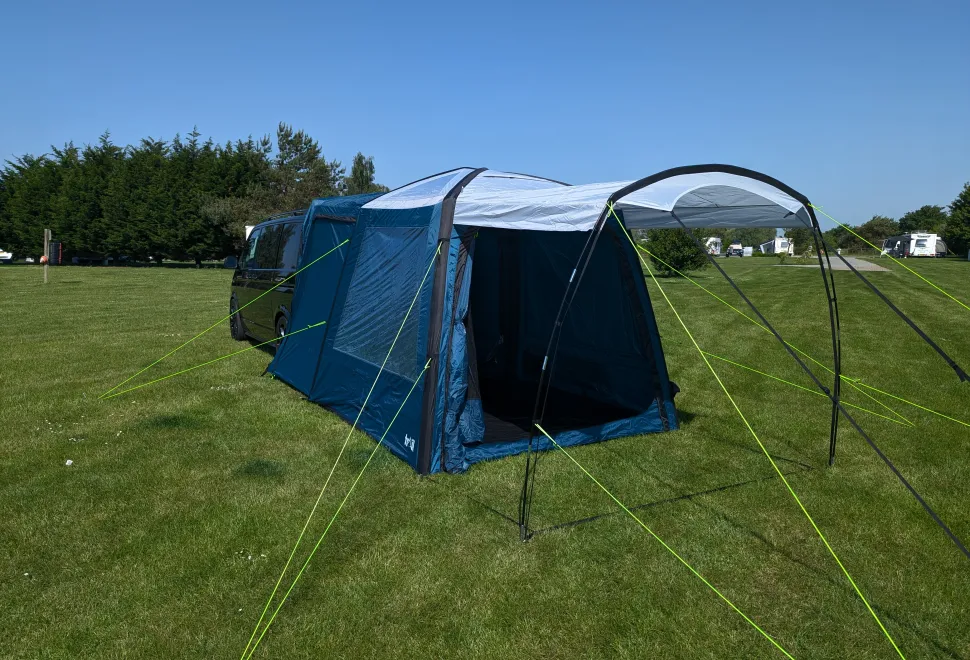
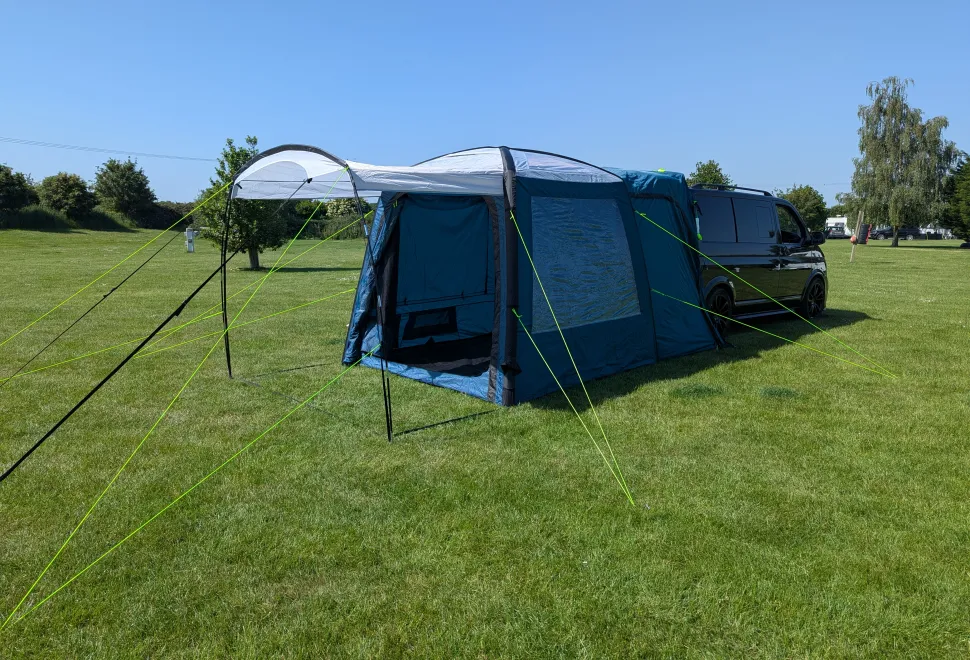
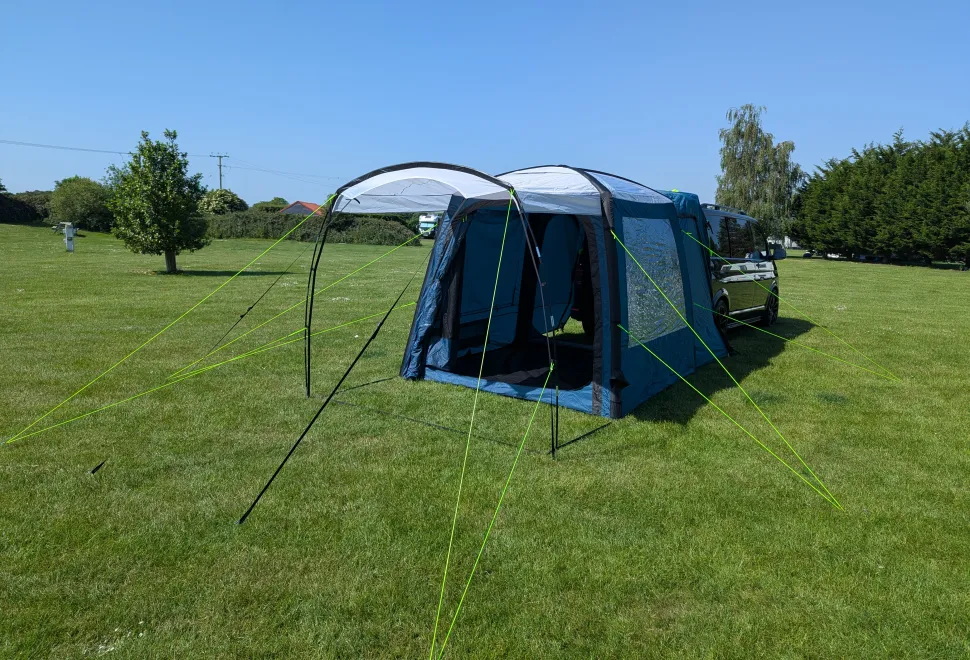
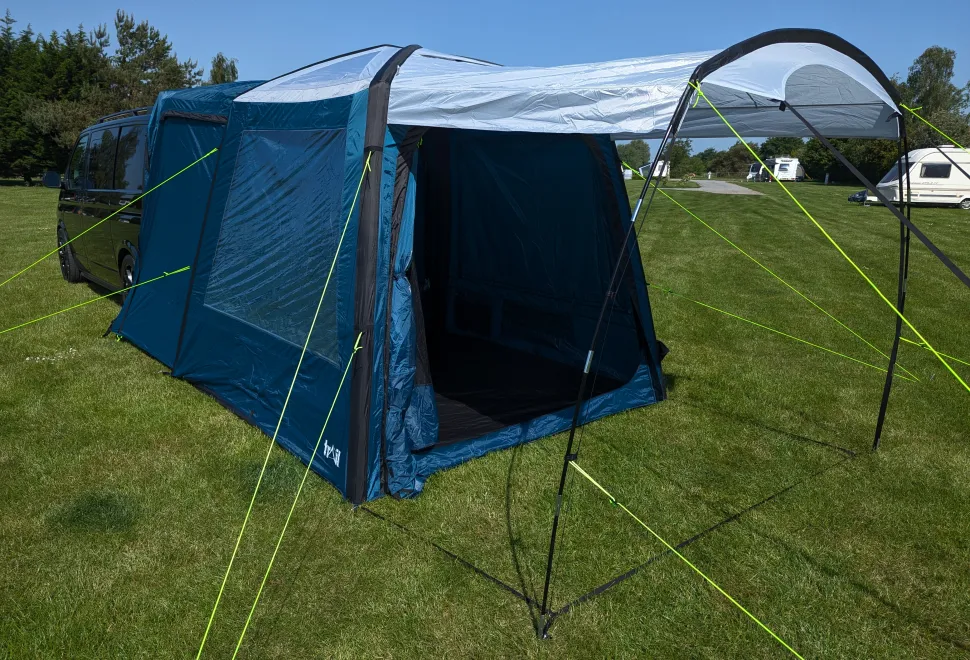
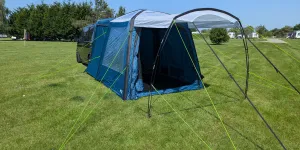
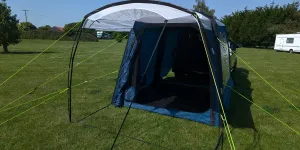
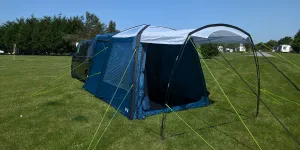
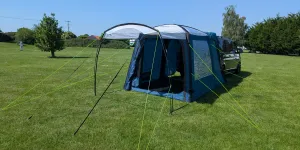
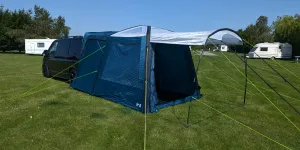
Size-wise, the main body of the awning is 2.10m tall and its footprint measures 2.5m by 2.5m, with another 2.5m of additional sheltered space under the front canopy, which can been rolled away in bad weather.
It’s designed mainly for mid-sized campervans up to 210cm in height– like the VW Transporter, Ford Nugget, Ford Transit Custom/Connect and the Ford Tourneo Custom/Connect – as well as SUVs.
And although it’s designed primarily to be used as a tailgate awning, you can also use it as a side awning if your campervan has an awning rail and the right connection kit.
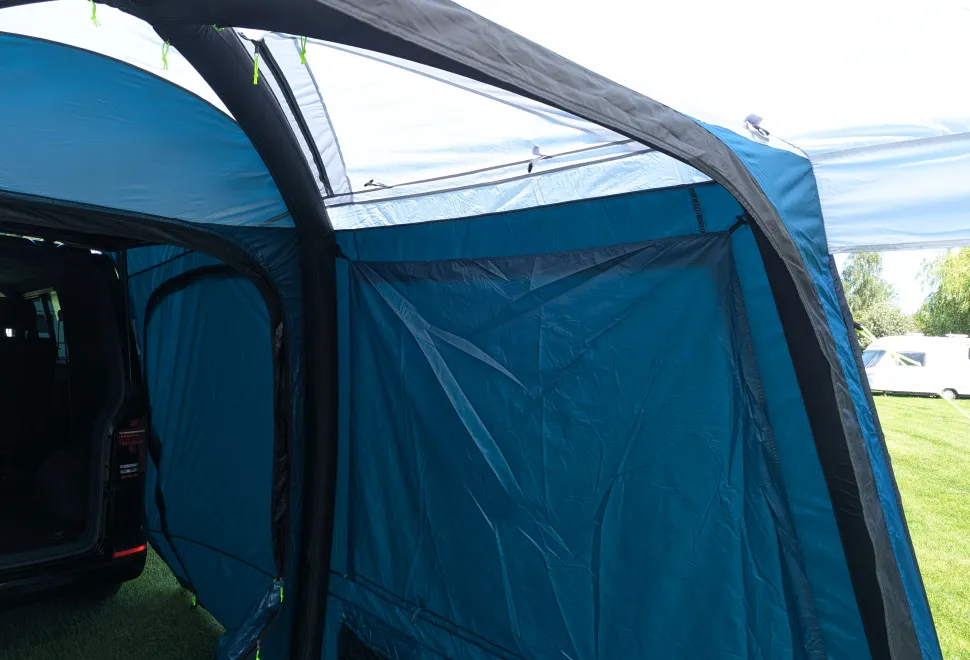
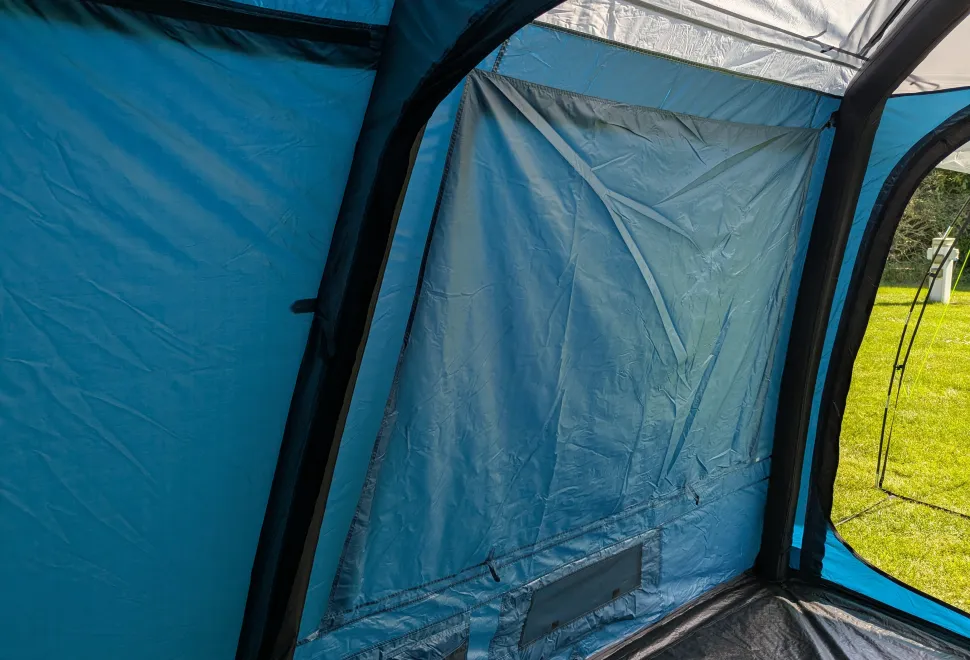
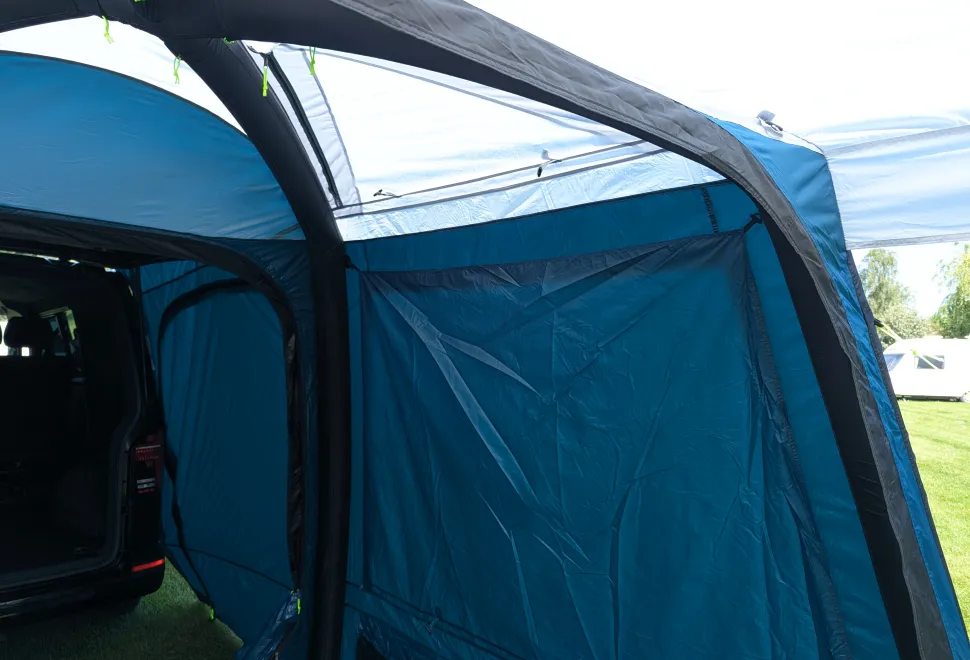
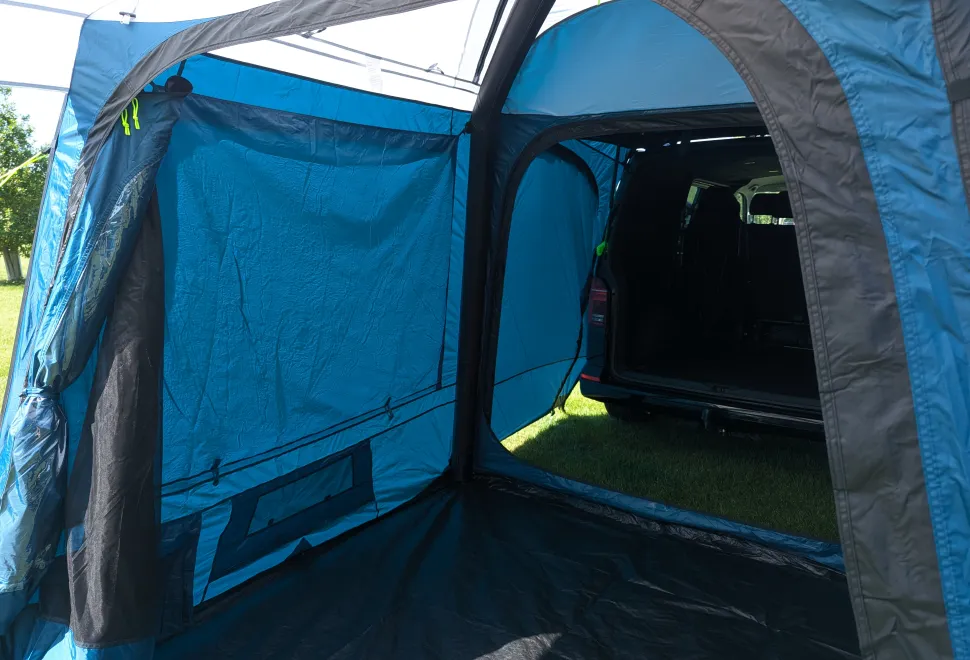
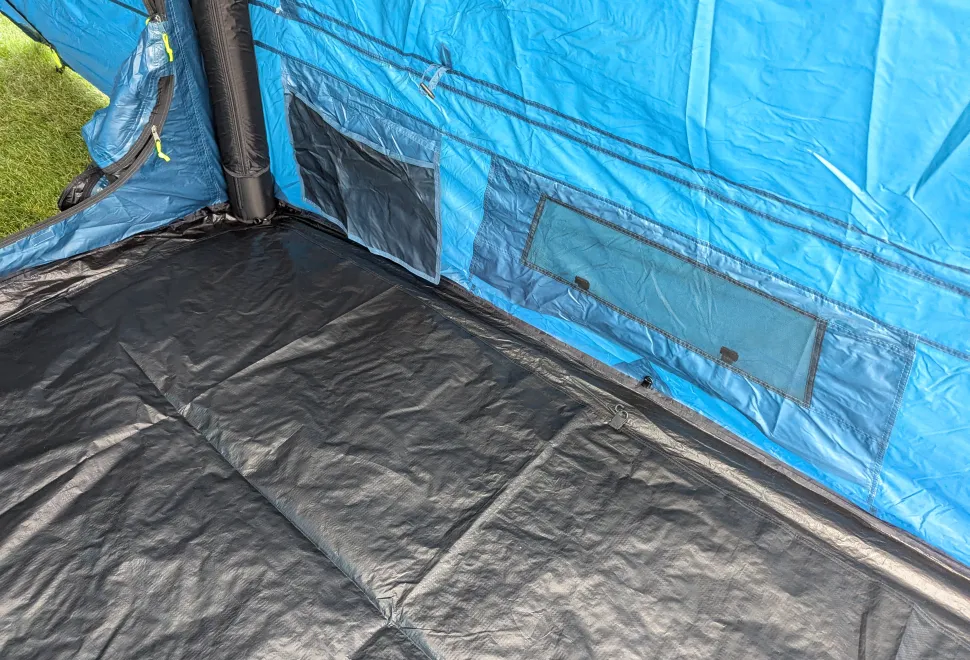
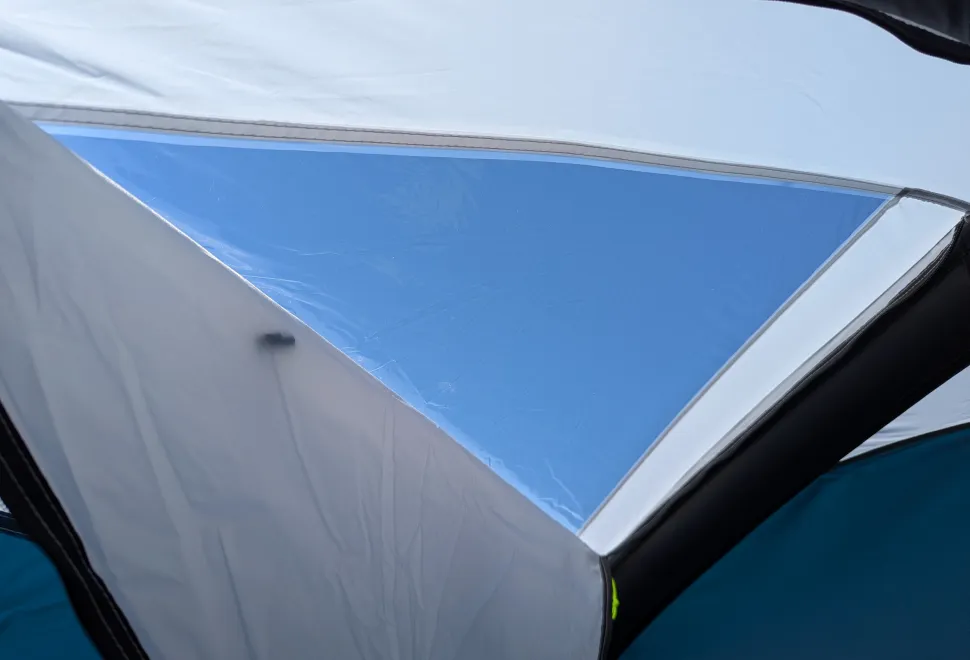
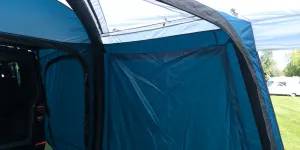
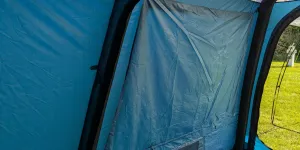
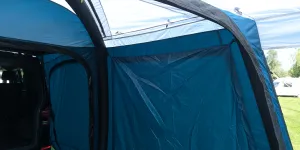
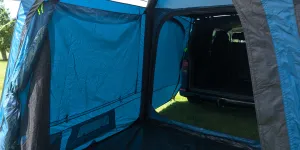
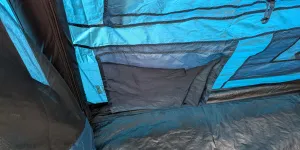
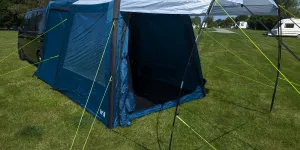
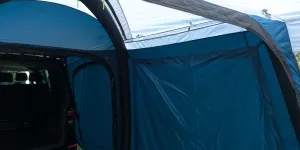
Inside, it’s surprisingly bright with good standing room throughout. You’ve got large PVC side windows with curtains, skylights in the roof and mesh ventilation panels to help reduce condensation.
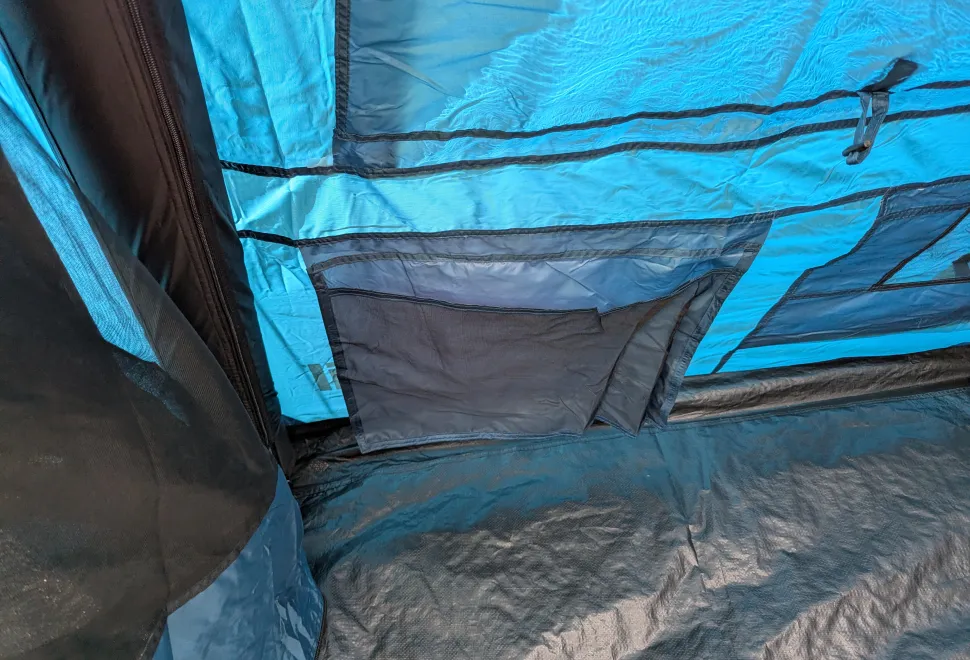
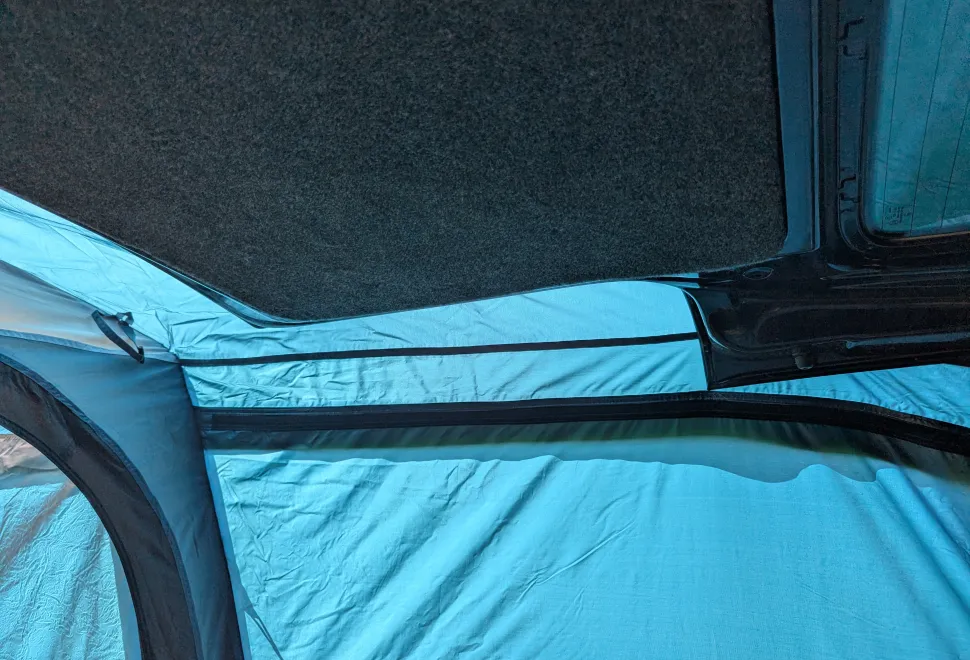
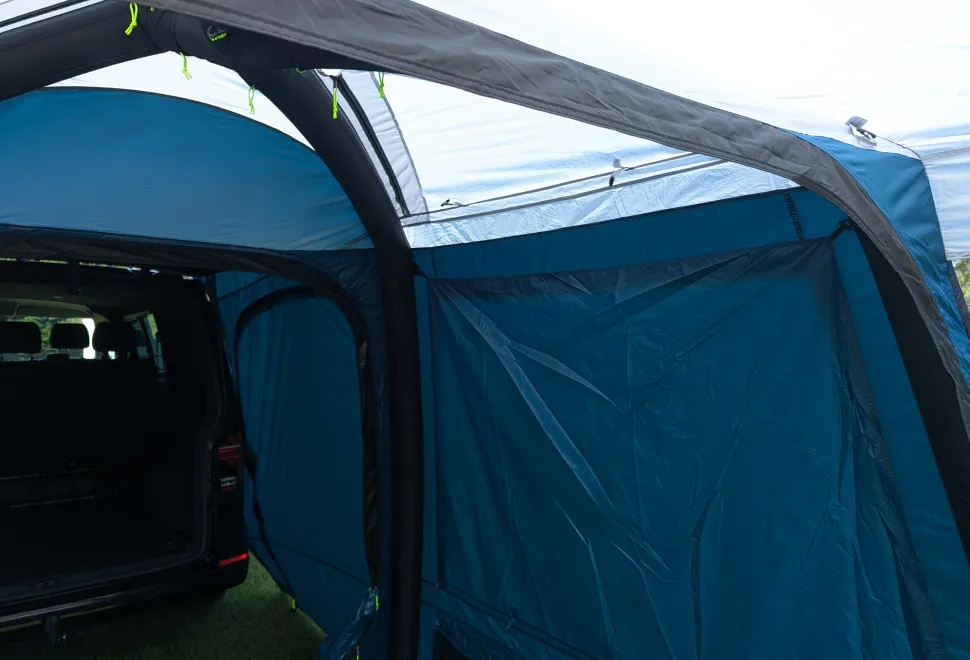
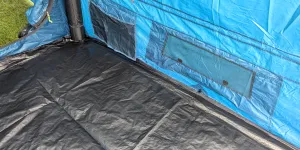
Side doors on the joining section between the main body of the awning and the campervan gives access to your vehicle without passing through the awning, A large D-door connects the awning with the vehicle. There are storage pockets dotted around the interior for smaller bits and pieces and the groundsheet clips in and out, which makes cleaning easier.
There’s also room to add an optional inner sleeping pod if you want to use this as extra sleeping space for kids or friends. And importantly for an air awning – yes, it does come with a pump!
That avoids that awkward moment where you realise you’ve bought a giant inflatable structure with no actual way to inflate it. As a former tent camper, I’ve been there…
Why use a driveaway awning?
So, why would you actually want a driveaway awning for your campervan?
Well, extra living space is the obvious answer. Campervans are brilliant, but unless you’ve got a massive coachbuilt motorhome, space is always at a premium.
A driveaway awning gives you somewhere to store wet gear, muddy boots, bikes, dog beds, portable toilets or just yourself when the weather turns.
If you’re away for more than a weekend, that extra room can make a huge difference.
Families especially tend to love them because the campervan itself stays less cluttered. And if you’re on a longer campsite stay, being able to leave the awning up while taking the campervan out and about is extremely useful.
But driveaways do have their downsides. First is storage and transport. Most awnings take up a fair bit of room once packed away, especially inflatable models, and they can be heavy which is worth taking into account when you think about your campervan’s payload.
The Trail Tailgate weighs 17.4kg and has a packed size of 68cm by 27cm by 28cm, broadly similar to rival awnings from the likes of Vango and Outwell.
Then there’s set-up time. One reason that some campers don’t like awnings is the length of time they can take to pitch, especially on one-night stops.
Driveaway awnings are mainly a campsite thing, so if you’re wild camping, overnighting in a car park or using French aires and quick stopovers, you won’t be able to put one up. So, they really are aimed at people who prefer to stay put for a couple of days on a site or longer.
Pitching and fixing
Inflatable awnings are certainly easier to pitch than old-school pole models, and the Trail Tailgate’s simplicity makes it even more straightforward.
You spread it out, peg the corners loosely, inflate the poles using the supplied pump, then tension everything properly with the guylines.
The first time I used it, it took around half an hour to pitch and with a bit of practice I reckon you could half that.
Attachment depends on your campervan. The awning can attach via straps over the roof and fits snugly onto the tailgate area, or onto the side via an awning rail with a driveaway kit.
Disconnecting it to drive away is pretty quick once you’ve done it a couple of times.
Thank you
Thanks to Incline Campers, Lincolnshire and Home Farm Touring Park for their help with this review.
Our Verdict
For the money, this is actually a really impressive package. It’s arguably not quite at the level of the premium awnings costing hundreds more – but it’s definitely closer than you might expect.
The materials feel decent, it’s easy to use, bright inside and gives you a very useful amount of extra living space. The downsides are really the same downsides you get with almost any driveaway awning – set-up time, storage space, and the fact they can really only be used on proper campsite stays.
But if you regularly spend a few days on site and want more room without spending a fortune, this makes a lot of sense. It’s a great-value piece of kit.
Disadvantages


