
Panama P12+ campervan review

Iain Duff Content Editor: Campervan/Camping
Iain Duff Content Editor: Campervan/Camping
Description
The latest campervan offering from Spanish brand, Panama, proves you can still get a well-equipped campervan on a budget.
Key Features
Full Review
Value for money has never been more important to campervan buyers than right now, with diesel prices heading towards £2 a litre. But that doesn’t necessarily mean grabbing the cheapest campervan you can find. It’s all about getting the most bang for your buck and this new offering from Spanish brand, Panama, available from Marquis Leisure’s nationwide network of branches, serves up a large helping of bang for a very reasonable amount of buck.
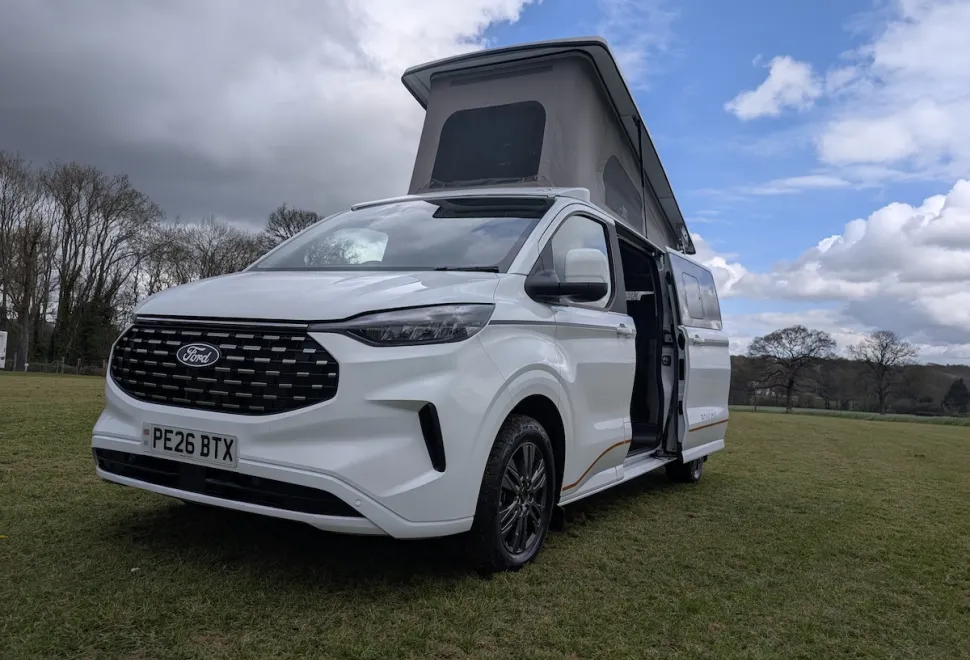
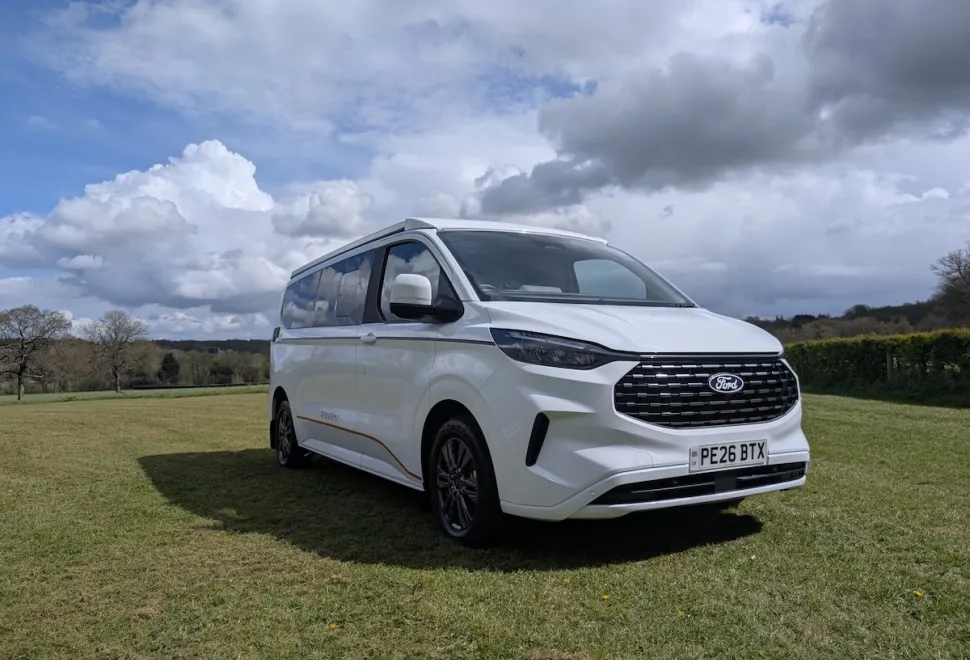
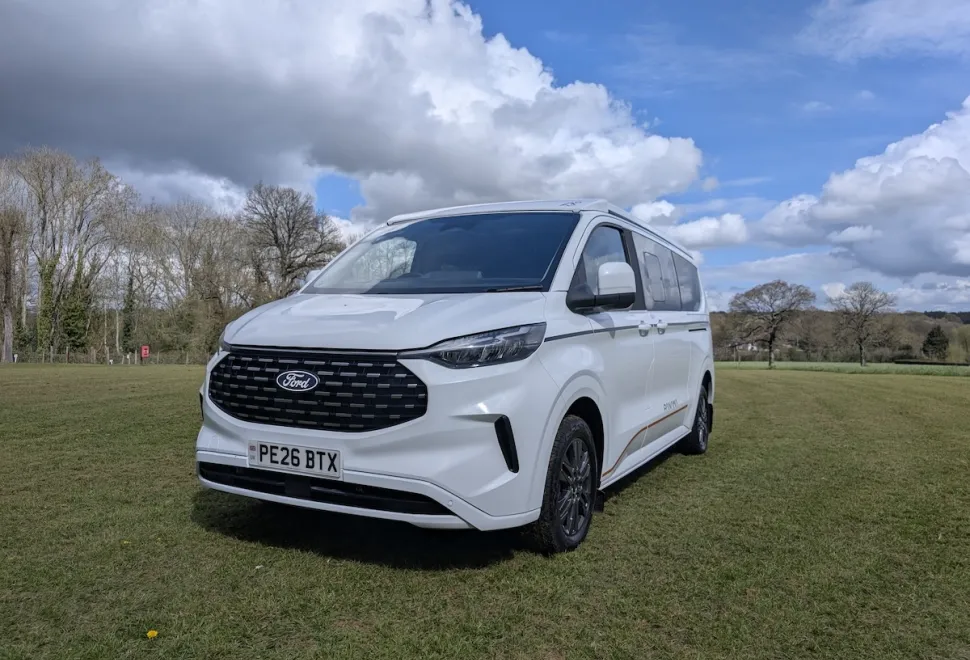
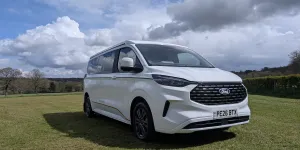
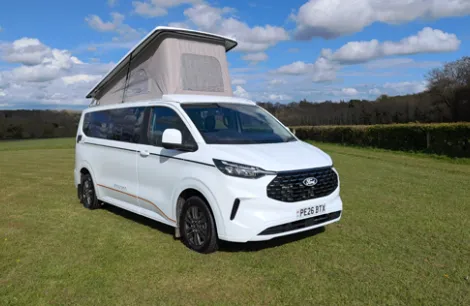
For just under £64,000, the Panama P12+ is based on a long-wheelbase Ford Tourneo Custom, the people-carrier version of the Transit Custom. And at a time when similarly sized campervans can come with a price tag of over £80,000, this seems refreshingly affordable.
Panama is part of the giant Trigano Group (as is Marquis) and the Spanish marque arrived on these shores at the start of the 2025 season, with two campervans, including the original P12.
External look
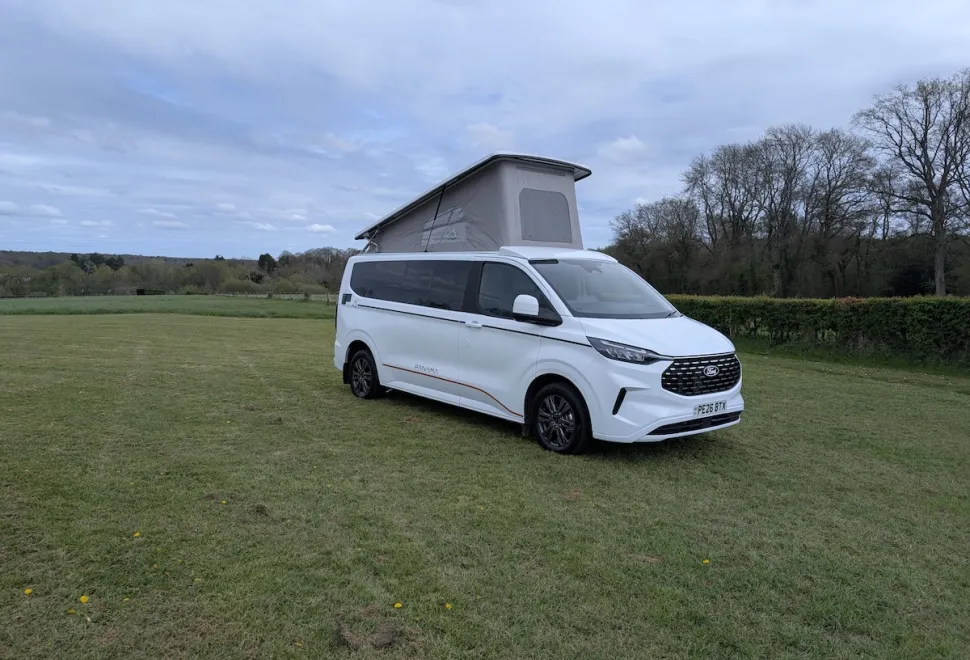
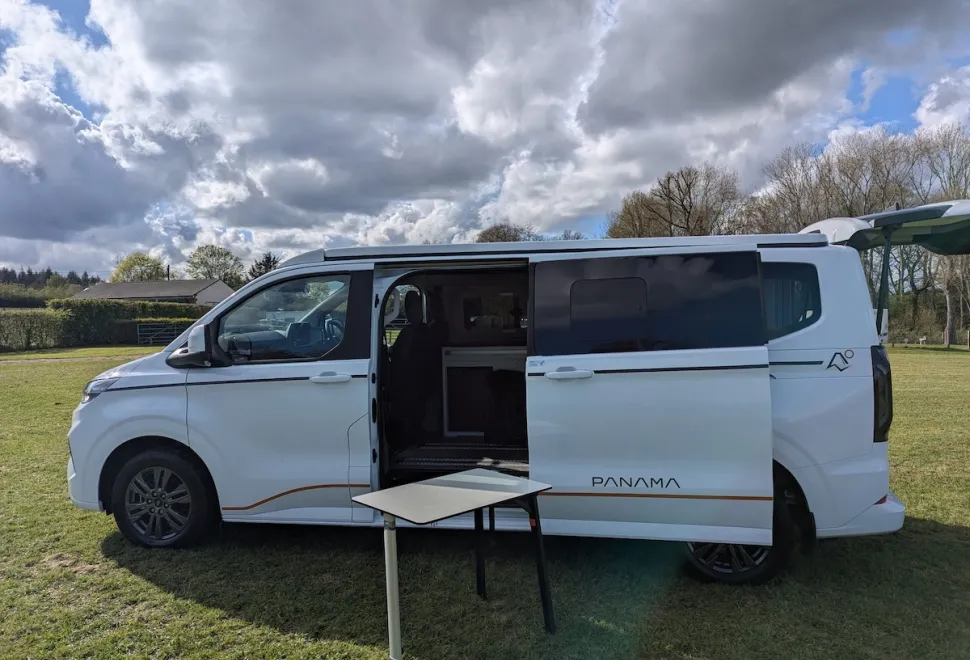
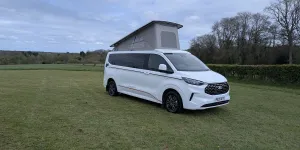
The new P12+ is a longer version of that, measuring 5.44m (40cm longer than the standard P12), which gives it more floor space and storage inside but makes it less practical for day-to-day use – it’s actually a fraction longer than a medium-wheelbase Fiat Ducato which offers rather more internal living space. You will fit it into some supermarket car parking bays, but only with one end hanging over the lines.
On the other hand, one issue the P12 had, which was flagged up in our video review at the time (watch at motorhome.ma/review316), was its height. The SCA pop-top roof took the overall height to 2.06m, meaning that it was just a little too tall to get into many car parks.
Panama has now replaced the SCA roof on the new model with its own pop-top. It keeps the total height of the campervan to exactly 2m, and that few centimetres’ reduction means it will clear more height barriers. It might also go into multi-storey car parks and even some domestic garages.
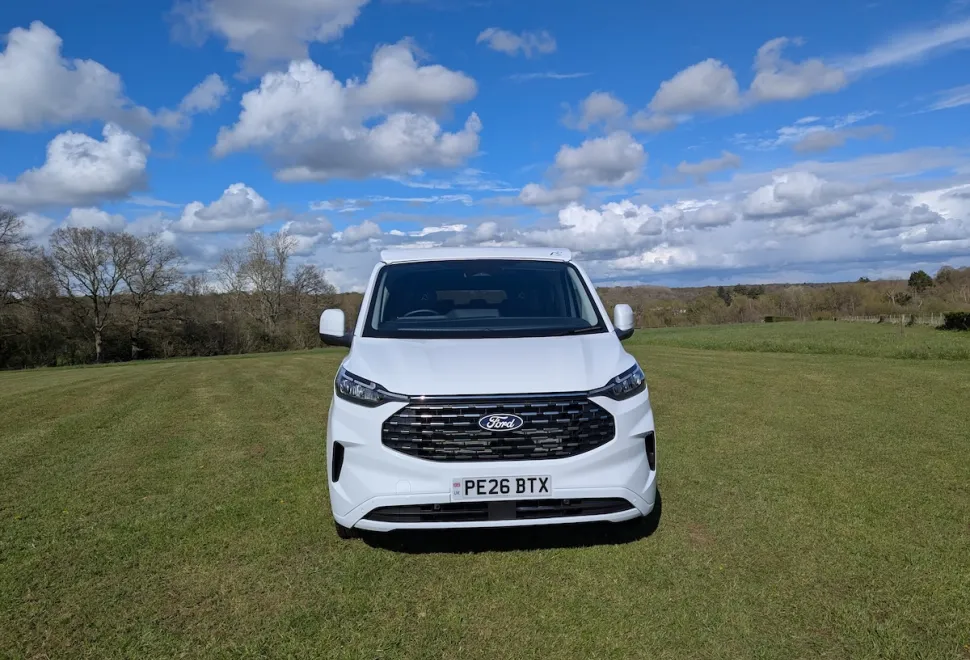
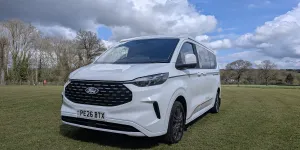
You might assume that the lower price means a significantly lower spec. And in some ways that’s true. For example, as Henry Ford (sort of) said 100 years ago, you can have any colour you want, as long as it’s white.
However, colour apart, this is far from a back-to-basics campervan. In fact, the Tourneo is more people-carrier than panel van and that shows in the level of spec you find, both inside and outside.
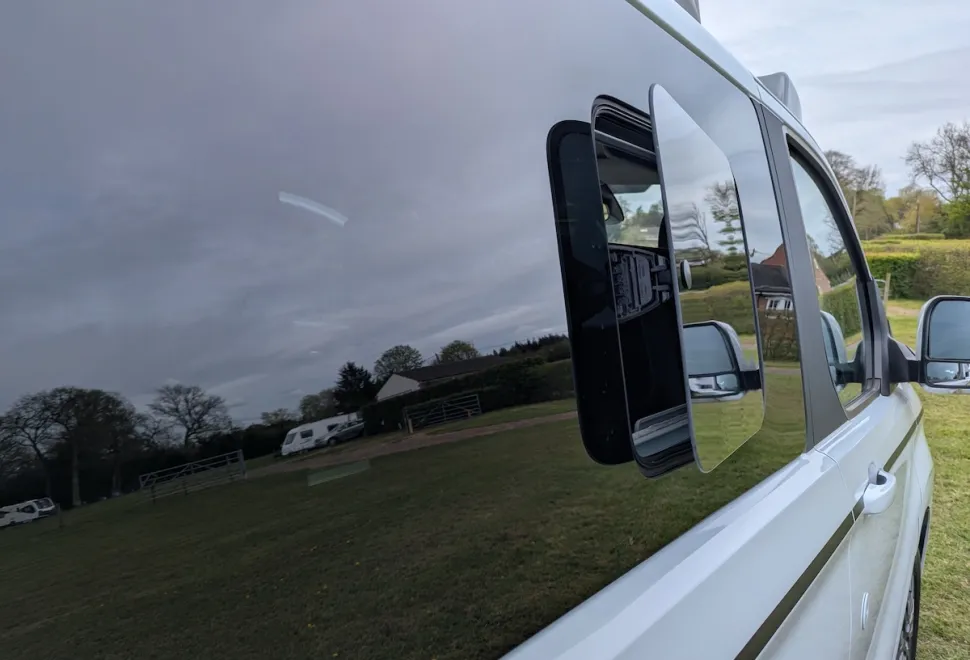
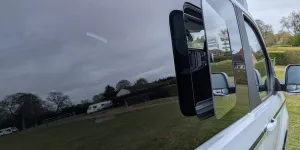
Panama doesn’t offer a lengthy list of options, or indeed any options at all. Instead, it has an array of high-end features as standard that you might otherwise expect to pay extra for, including 17in alloy wheels, flush tinted side windows, a colour-coded front bumper, LED headlights with cornering function and heated electric wing mirrors.
Internal spec
It’s the same story inside, where you get all the latest driver assistance technology, including keyless entry and starting, parking sensors (front and rear), speed sign recognition, lane-keeping assist, wrong way alert, cruise control, pre-collision assistance, emergency brake and hill start assist.
If you enjoy being harangued by your vehicle while you’re driving, you’ll also appreciate the stern warnings you receive if you take a hand off the steering wheel, drive too long without a break or veer slightly from the centre of the lane. And woe betide you if you stray even 1mph over the speed limit, when you will instantly face the Ford’s wrath via a tirade of bongs. Or so I’m told – obviously it’s not something a responsible reviewer would ever do!
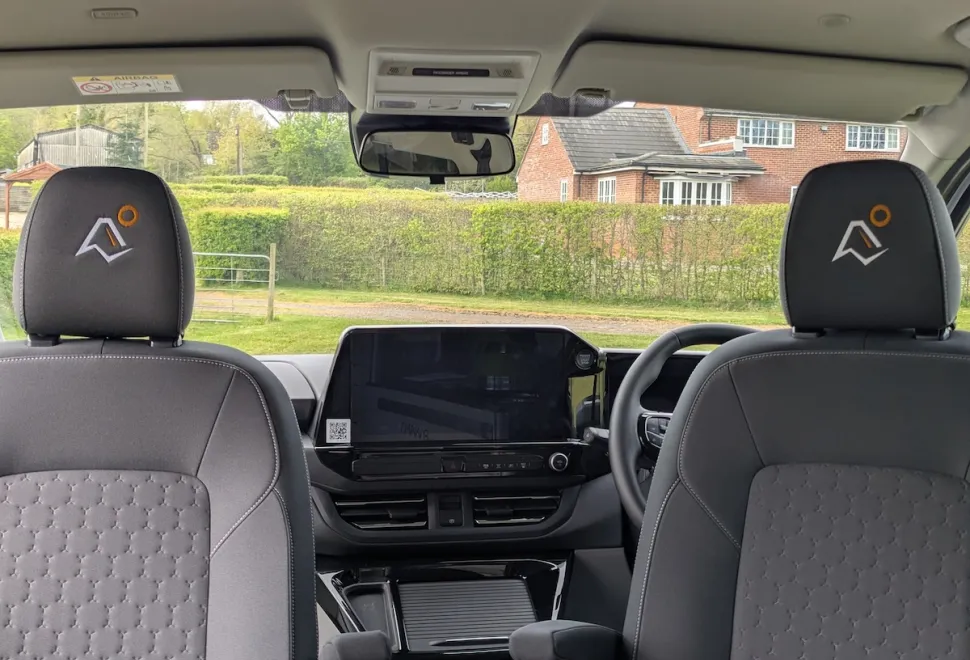
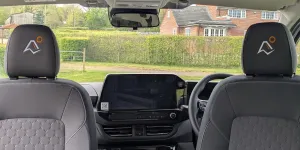
The SYNC 4 13in touchscreen features DAB radio, Bluetooth connectivity and a reversing camera, as well as Apple CarPlay and Android Auto.
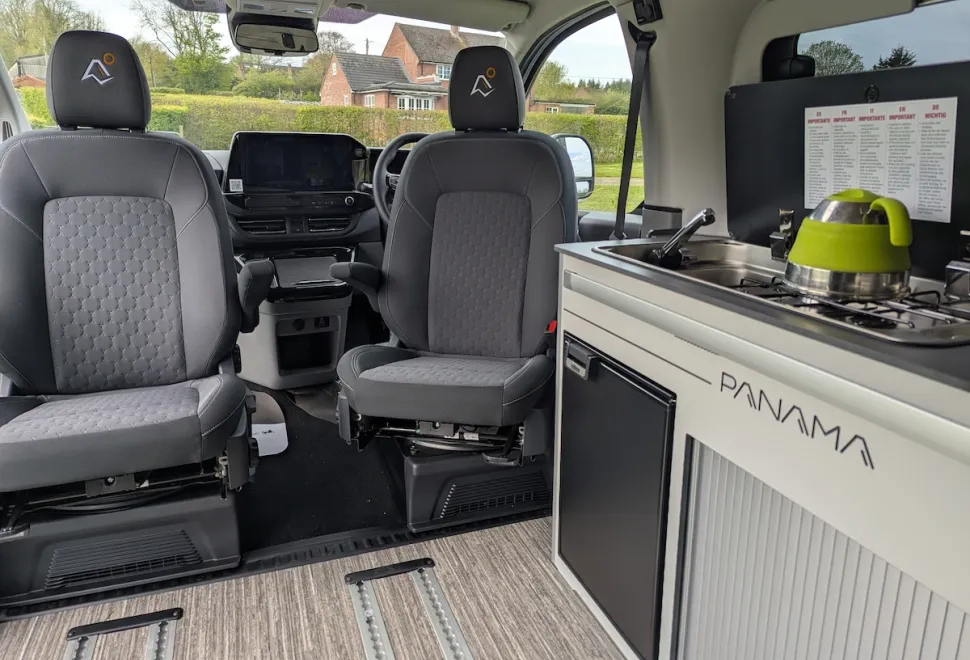
Comfort is also to the fore in the cab, with climate control air-conditioning and heated front seats with armrests, height adjustment and lumbar support included as standard.
Under the bonnet you’ll find a 2-litre EcoBlue diesel engine with 136hp, which is linked to an eight-speed automatic gearbox (there’s no engine upgrade option, although Panama does offer a petrol/electric hybrid elsewhere in its range).
The gears are controlled from a stalk on the steering wheel, which is quite intuitive once you get used to it, but a contrast to the rotary gear knob now fitted to the larger Transit.
Living area
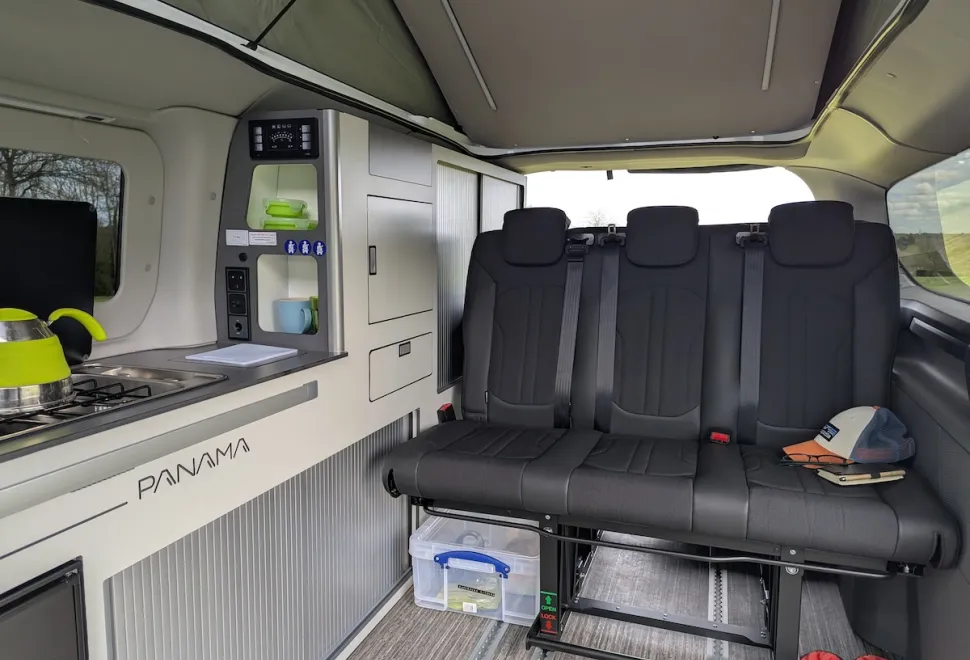
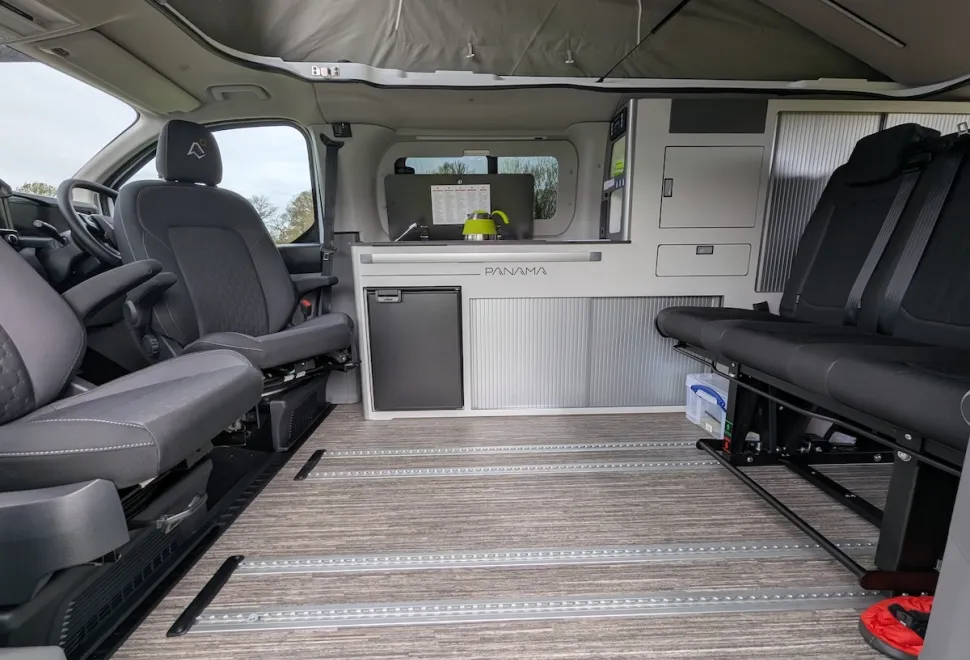
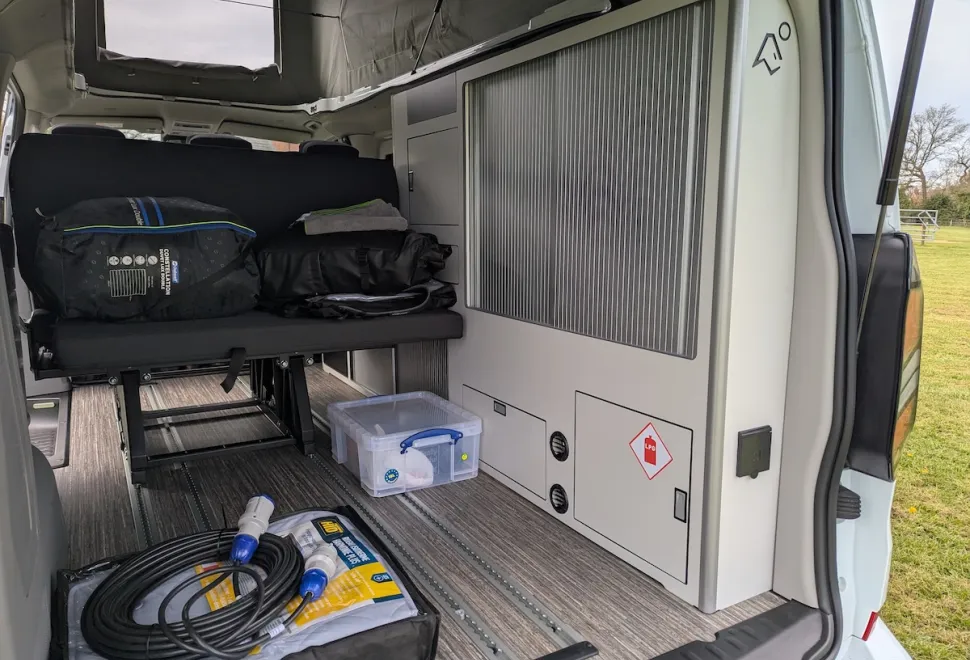
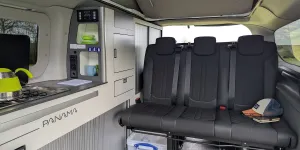
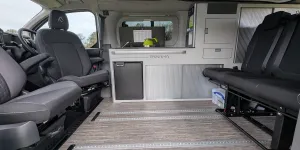
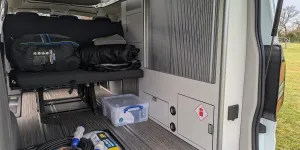
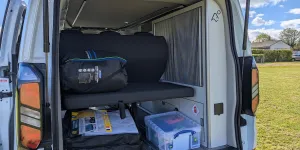
In the back, the three-seater Mobiframe bench slides on floor-mounted rails, so you can move it all the way forward towards the cab seats or slide it back to create more floor space.
That means if you’ve got kids in the back, then they can be sitting a little bit closer to you (assuming that’s something you think is a good idea!). Speaking of kids, there are Isofix fittings for child seats on two of the seats here, as well.
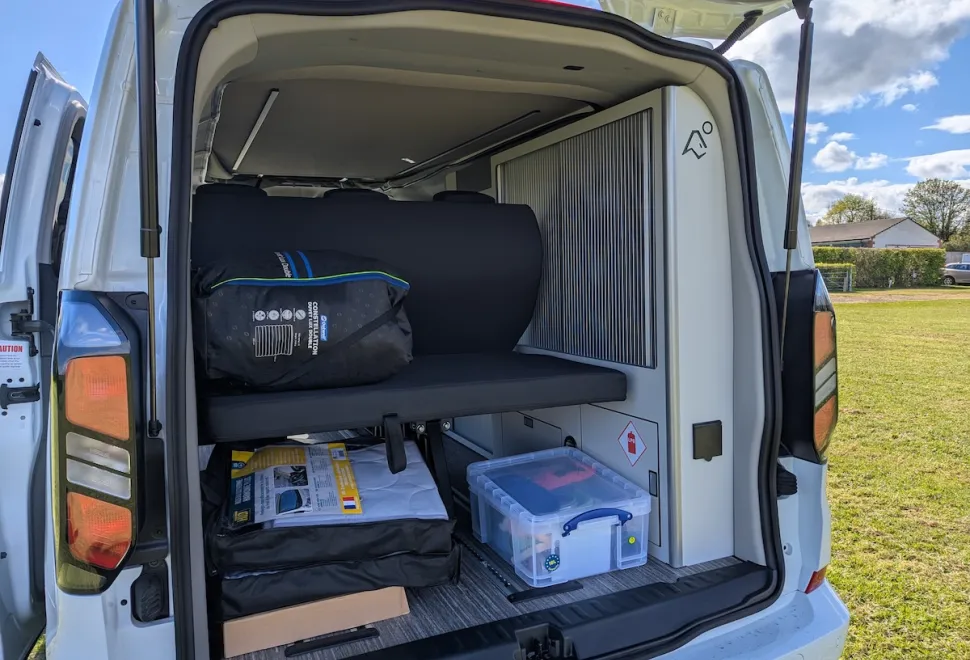
Perhaps even more importantly, sliding the seat forward creates loads more space in the boot. The rear section of the bed, behind the seat, can be left flat to use as a parcel shelf where you can store bedding, or it can be folded upright to fit taller items in the back.
There’s more storage under the seat, but it could do with a panel along the front of the seat base to stop items sliding into the living area when you hit the brakes.
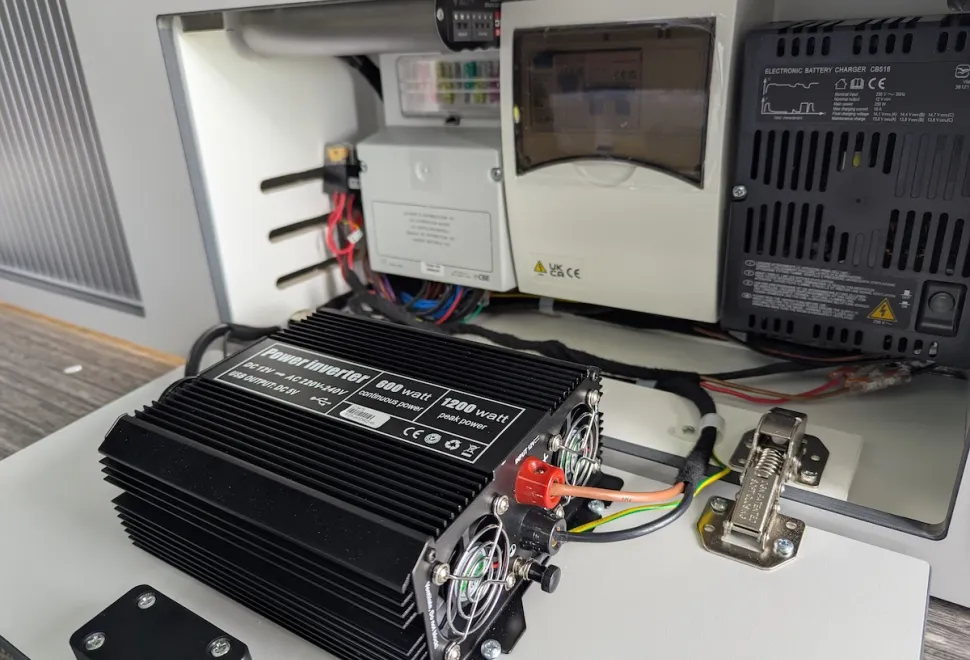
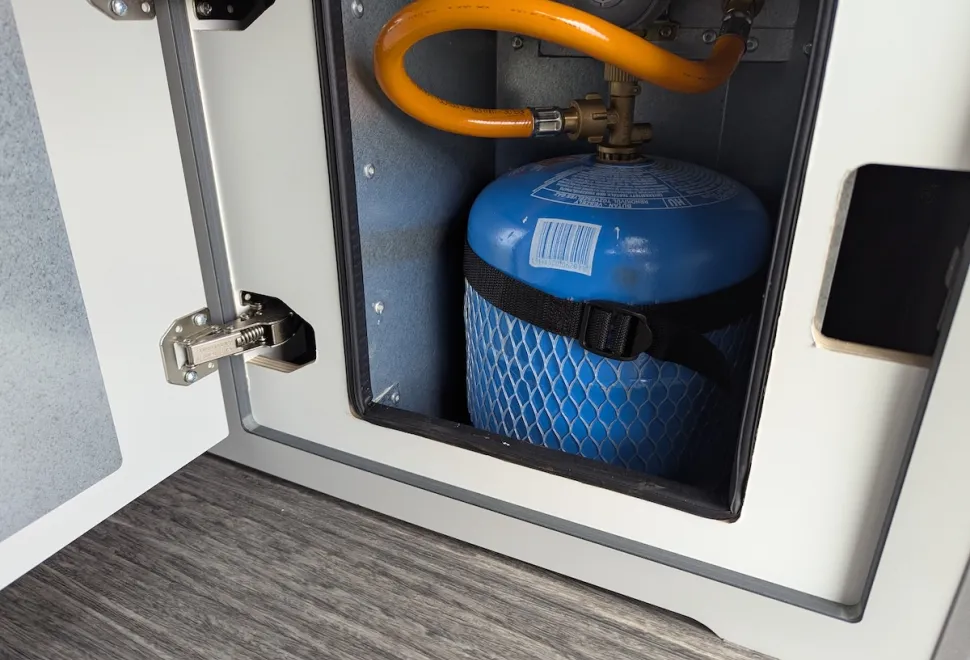
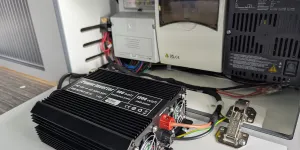
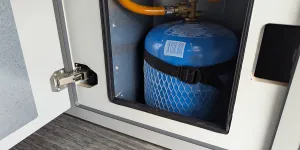
The gas cylinder – just a single Campingaz 2.72kg – also stores in a compartment at the side of the boot and alongside you can access the electrics, including an inverter, which lets you use a low-power mains appliance without hook-up. You shouldn’t need more gas as the heating is diesel-powered and the fridge is electric only.
Sleeping set-up
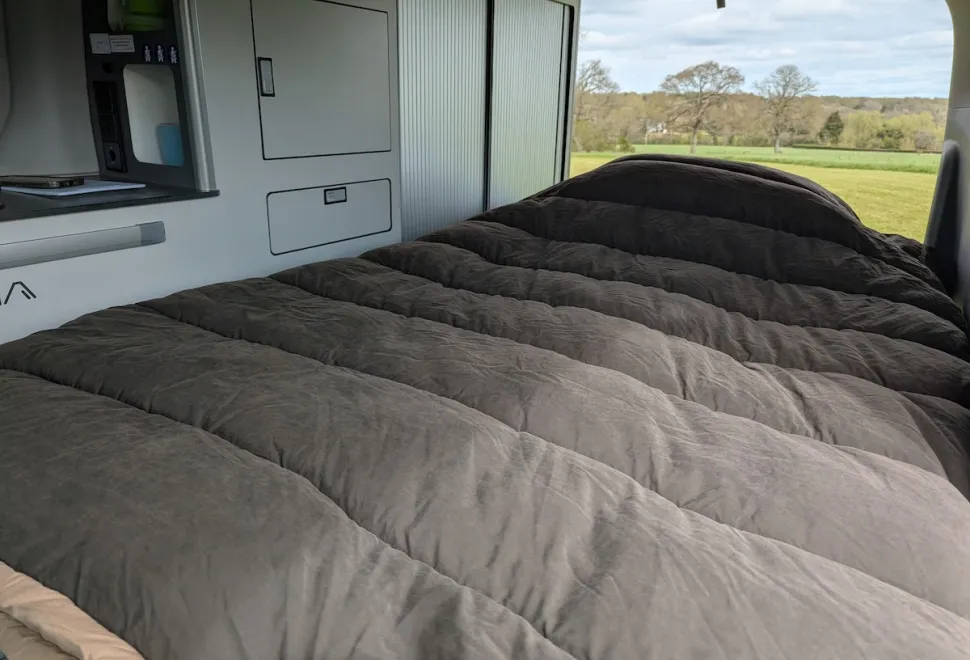
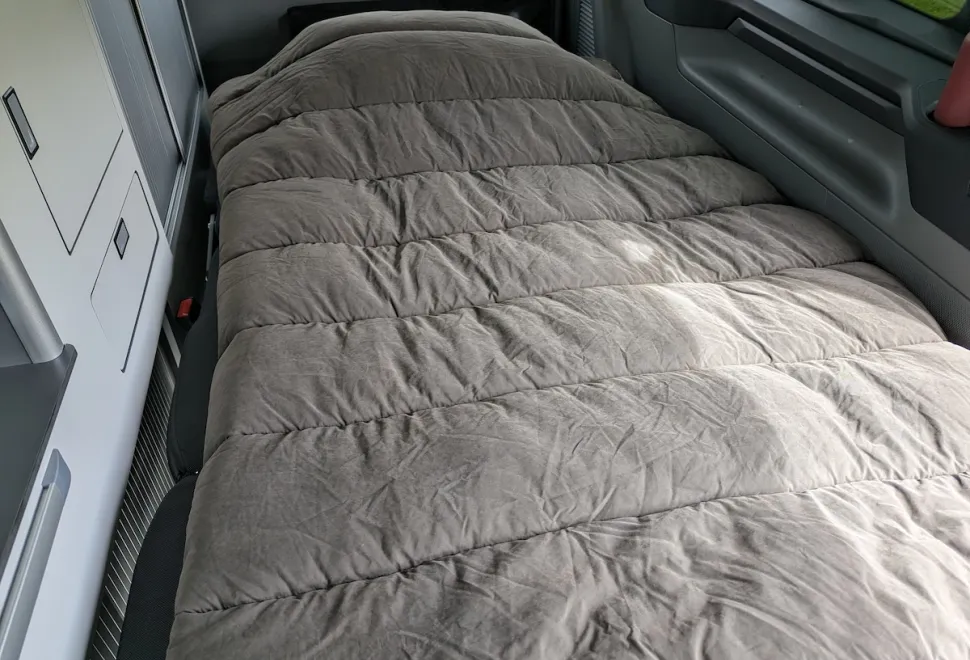
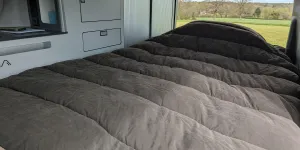
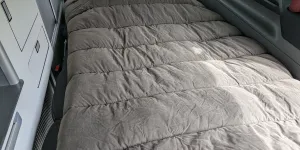
Converting the seat into a double bed is really easy. Start by lifting the handle at the front, then slide the seat base out and flip it over. Lean over and lift the little red lever, which lets you fold the backrest flat, then flip over the end section of mattress. It creates a flat surface to sleep on – and because you’re not lying on top of the seat, there are no uncomfortable ridges or seatbelts. If you store your bedding on the rear parcel shelf, it will simply be a case of pulling it into place.
The bed is a decent 1.19m wide and a fairly generous 1.91m long and you can raise the head end of the bed to create a chaise longue set-up for breakfast in bed. When the bed is in situ, there’s still enough floor space to accommodate a Porta Potti or maybe a dog bed and, importantly, you can still get access to the fridge, so your morning cuppa doesn’t have to be black…
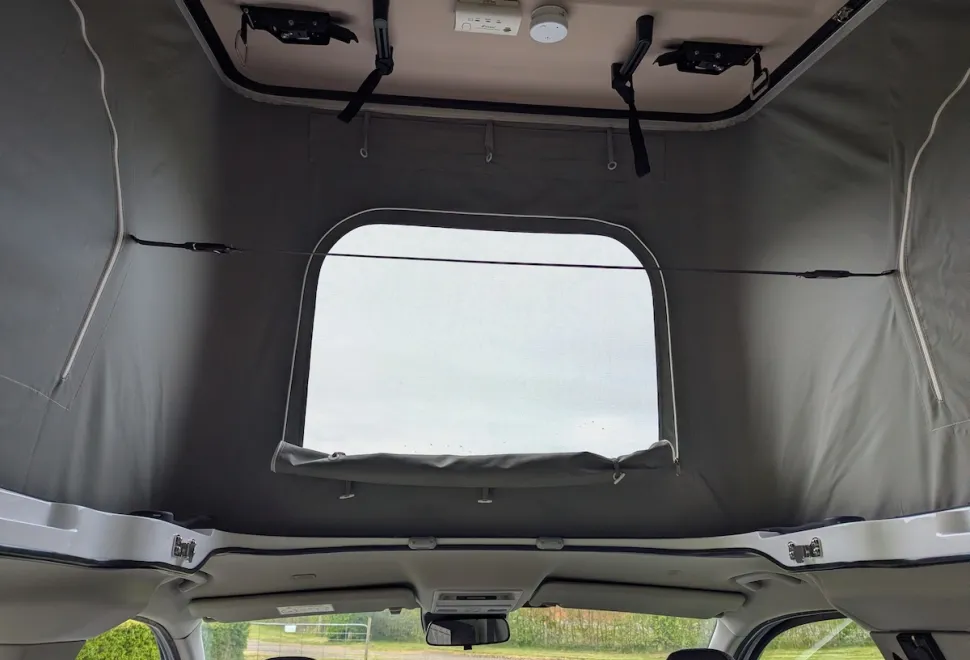
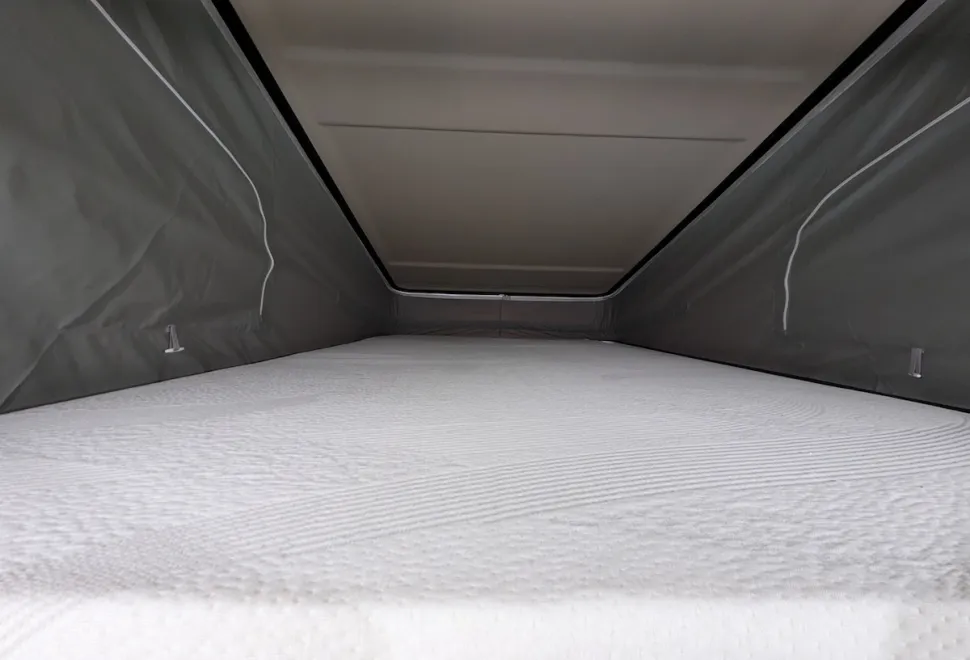
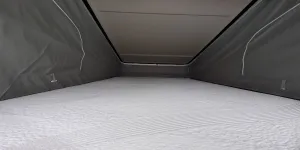
The second double bed is ‘upstairs’ in the pop-top. It is slightly longer than the downstairs double and the mattress sits on wooden slats. So, it’s perhaps not as comfortable as a bed with the plastic springs found in some campervan roofs, but certainly far better than a flat board. There are a couple of flexible reading lights with USB sockets up there, too.
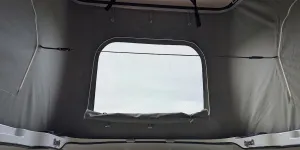
The pop-top has large mesh windows at the front and on both sides, but PVC windows would be helpful in allowing in more light when the weather doesn’t permit the mesh panels to be opened. Combined with the tinted windows, it does make the living area quite dark on dull days.
Cooking and dining
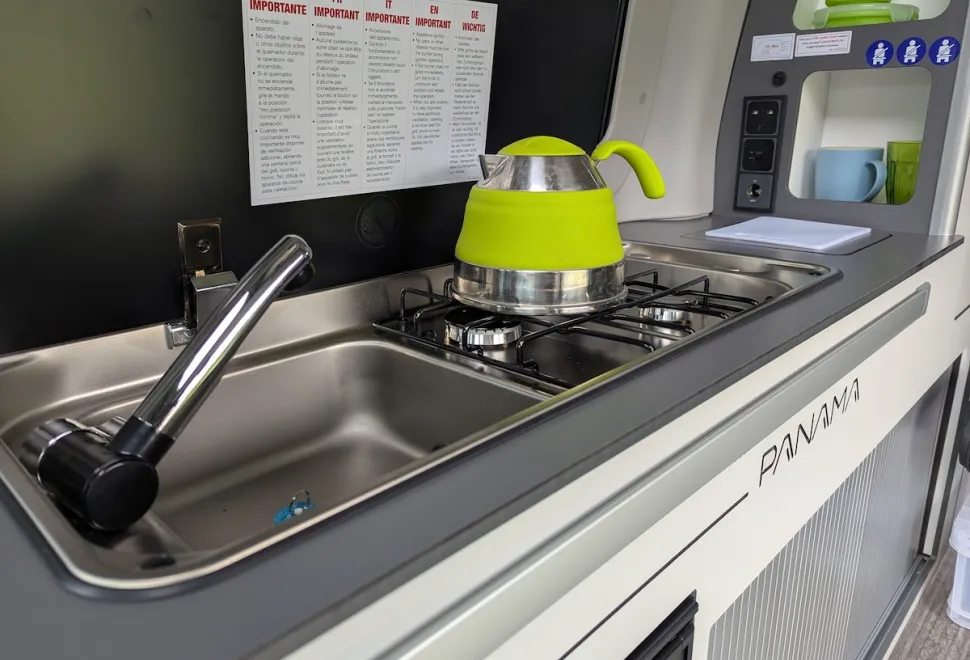
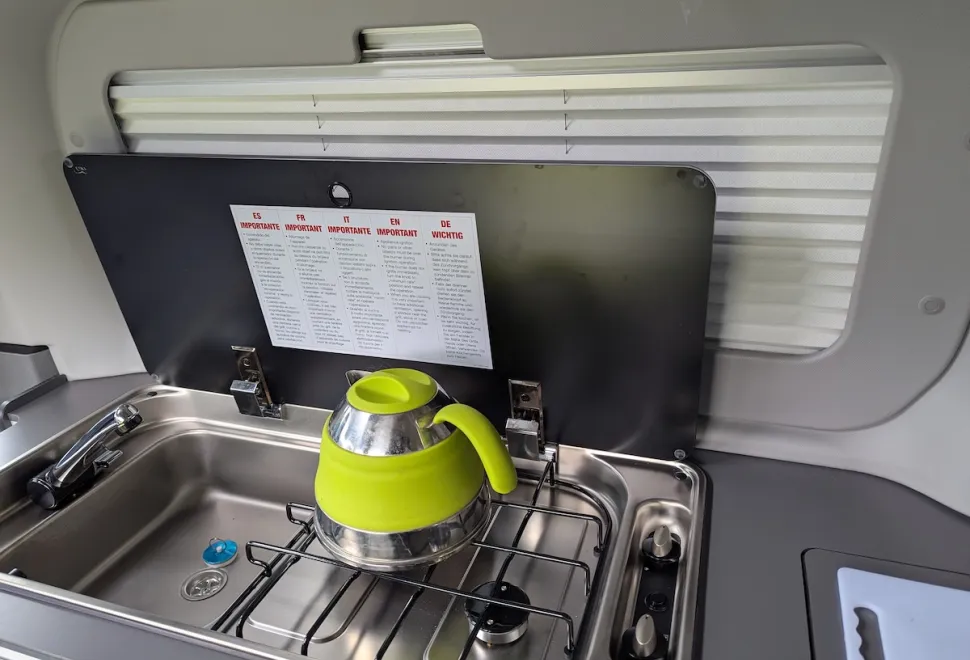
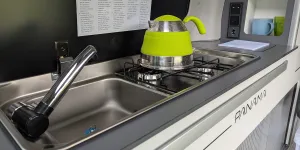
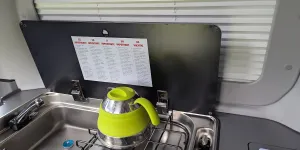
Back downstairs, the P12+ has the typical campervan side kitchen layout, featuring a Can hob with two burners and a stainless-steel sink with a cold water tap supplied from a 50-litre inboard tank. When closed, the glass lid sits flush with the worktop to extend the usable surface space. In fact, there is actually a reasonable amount of worksurface alongside the cooker.
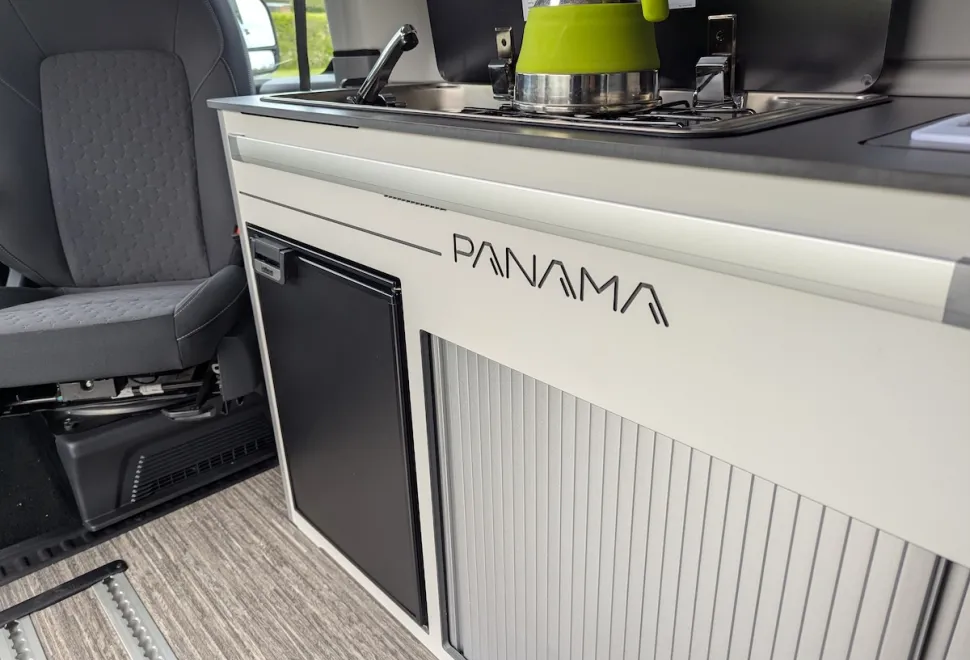
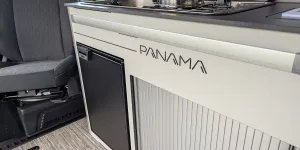
The 42-litre Isotherm compressor fridge is a good enough size for the essentials and it also has a small freezer compartment.
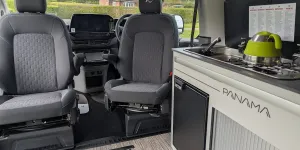
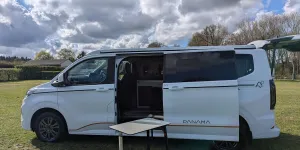
The dining table attaches to a rail on the front of the kitchen unit and it’s a good size for four. You can place it in front of the swivelled cab chairs and slide the rear seat forward, so a quartet of diners are all within reach of the table, which often isn’t the case with this type of campervan layout..
The table also has an extra set of foldaway legs, so it can be used as a free-standing table outside when the weather is good. The downside is that it is stored in a zip-up canvas bag attached to the inside of the tailgate. It’s a little awkward to fit it in and it’s not ideal if you need to bring it into the camper or put it away when it’s raining. However, it doesn’t intrude into the boot space as in the original P12.
Warmth comes from a Webasto 2kW blown-air diesel heater, so you don’t need to worry about eating into your gas supply when you need to take the edge off the chill – in fact, your gas is only for cooking. Controls for the heating system are just behind the driver’s seat.
Storage
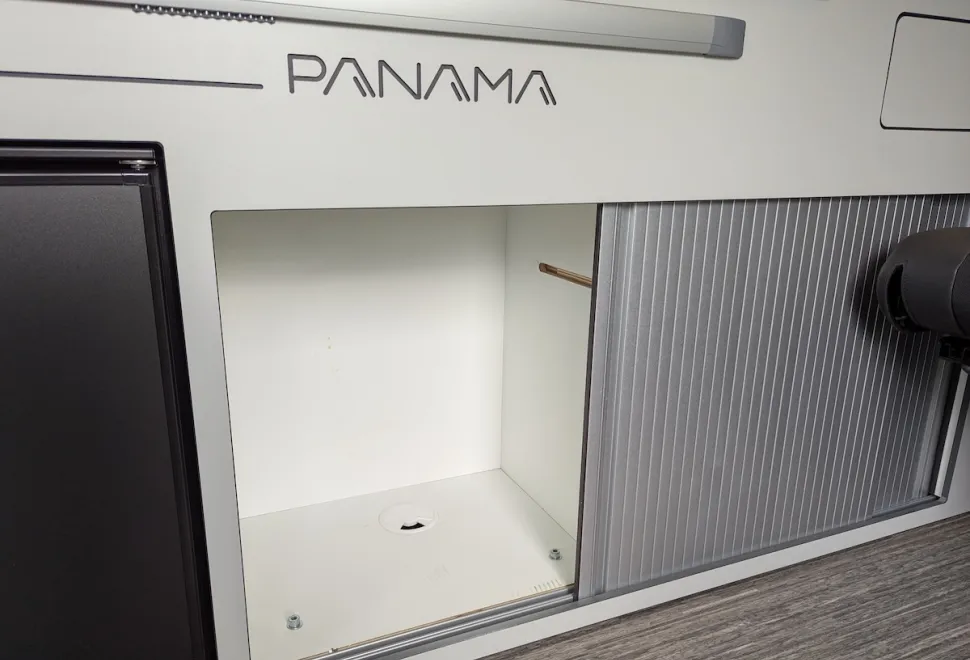
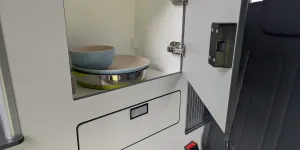
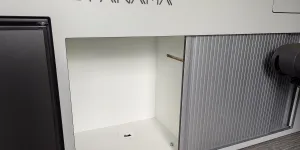
Storage in the kitchen is an improvement on the short-wheelbase P12. Alongside the fridge there’s a cupboard for your Porta Potti and beside that there’s similar-sized storage for pots and pans, or tins and packet food.
The tambour doors here mean the cupboards are accessible regardless of the sliding seat’s position or the bed set-up.
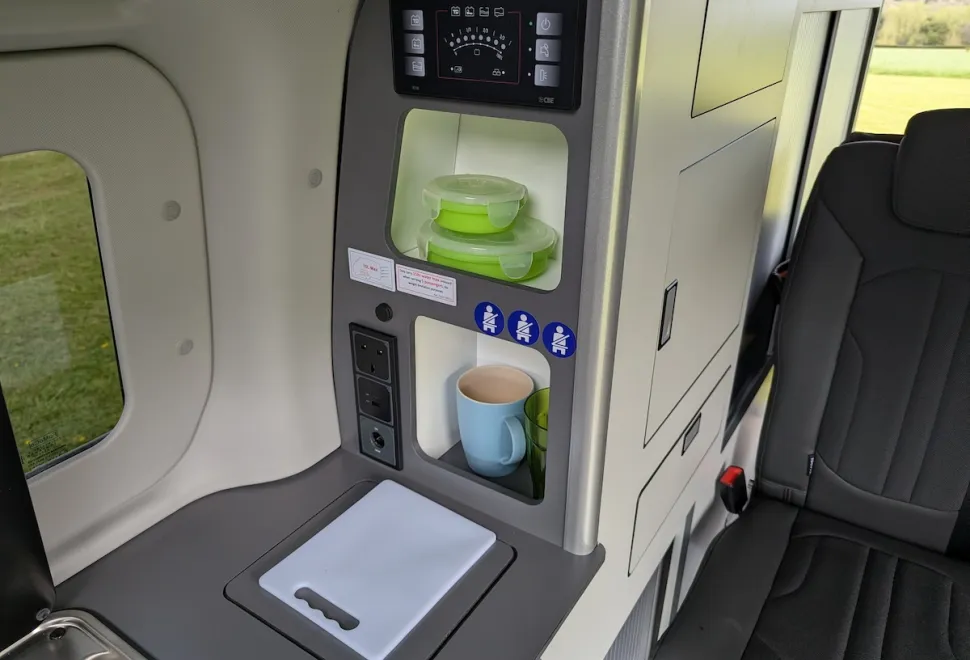
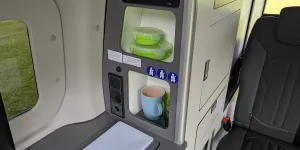
Further storage can be found beneath the worktop, which is accessed from the top by lifting a small hatch, and there are two cubbyholes for mugs, etc, at the end of the kitchen unit.
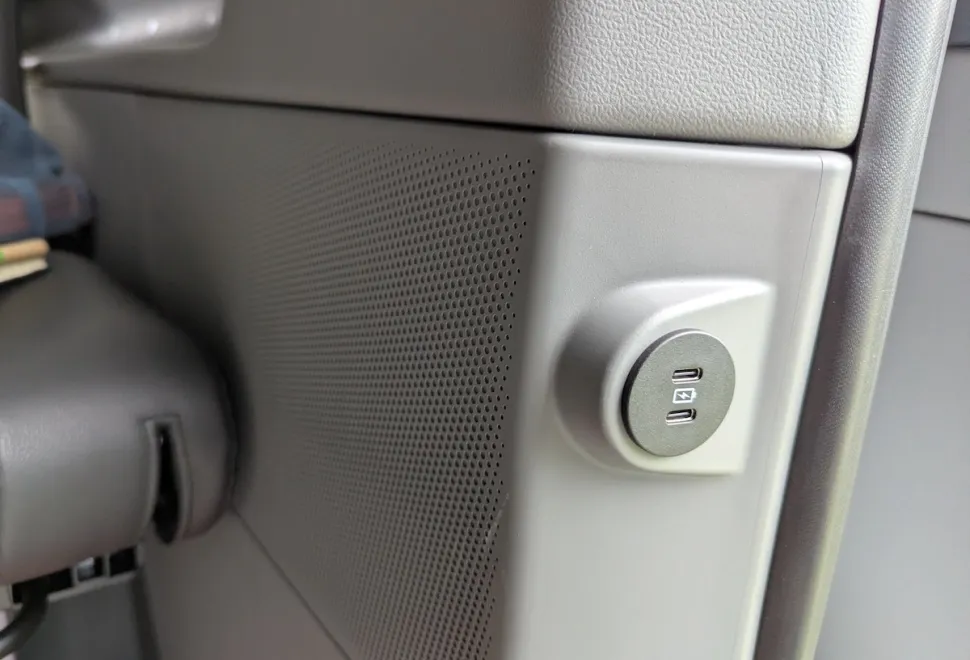
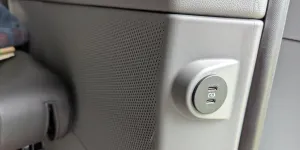
You’ll also find 12V, 230V and USB power points here, and there are more of these at the other end of the galley, behind the driver’s seat.
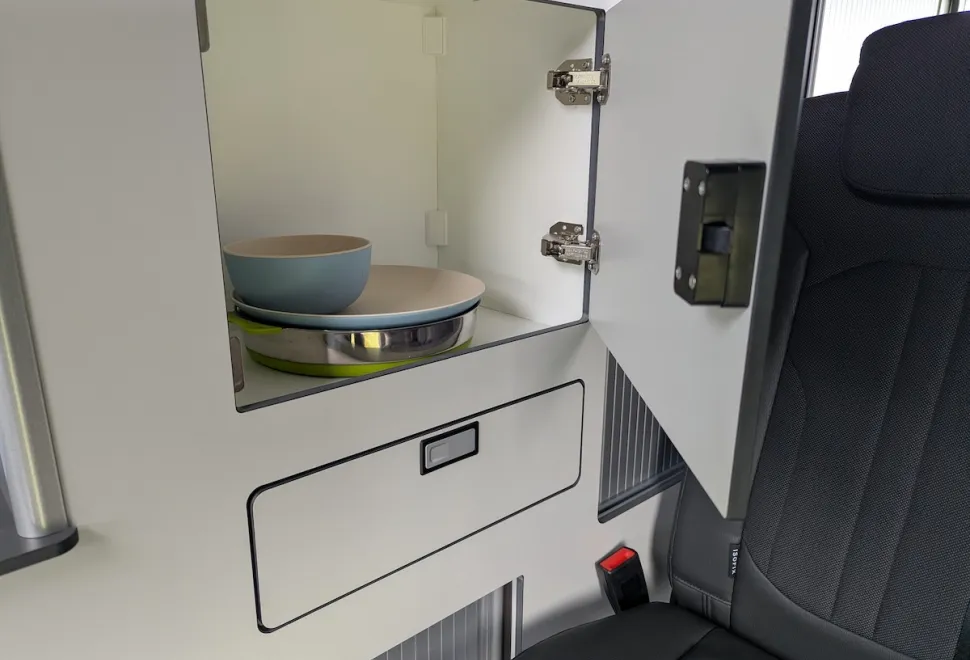
There are no overhead lockers, but further back, alongside the rear seat, there’s a cutlery drawer and a couple more cupboards – one decent-sized, the other tiny, but fine for slotting in smaller items.
Completing the storage are the two tall lockers at the back, again with tambour doors to make access easier. One of these is almost entirely taken up with a ladder for accessing the pop-top roof area. You might find that surplus to requirements (especially if kids sleep up top) and you could leave it at home to make much better use of the cupboard (storing clothes, for example). Similarly, you can create more general storage space if you don’t need to take the loo with you.
More features and options
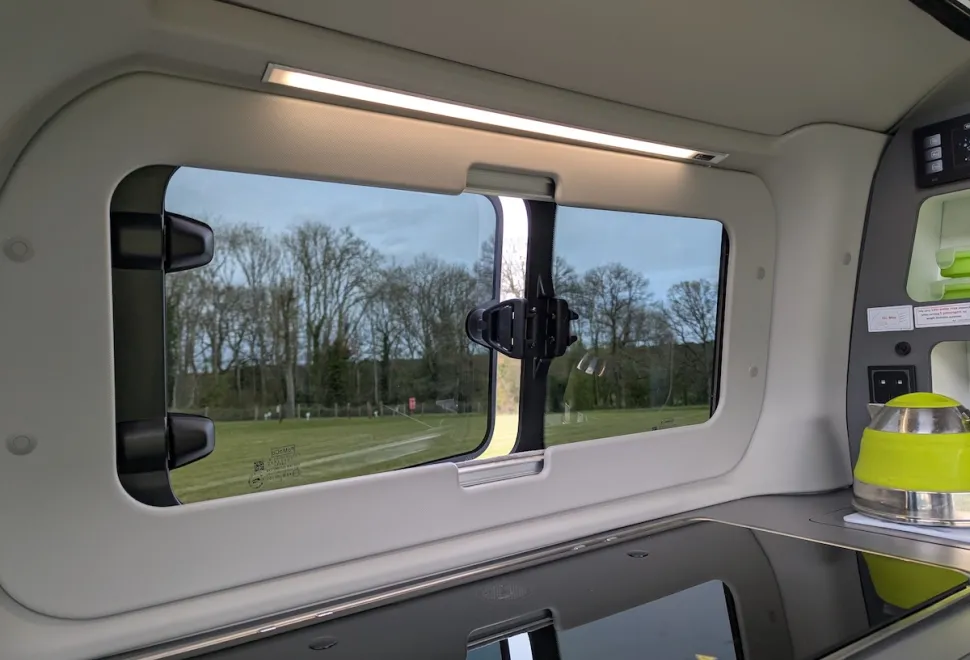
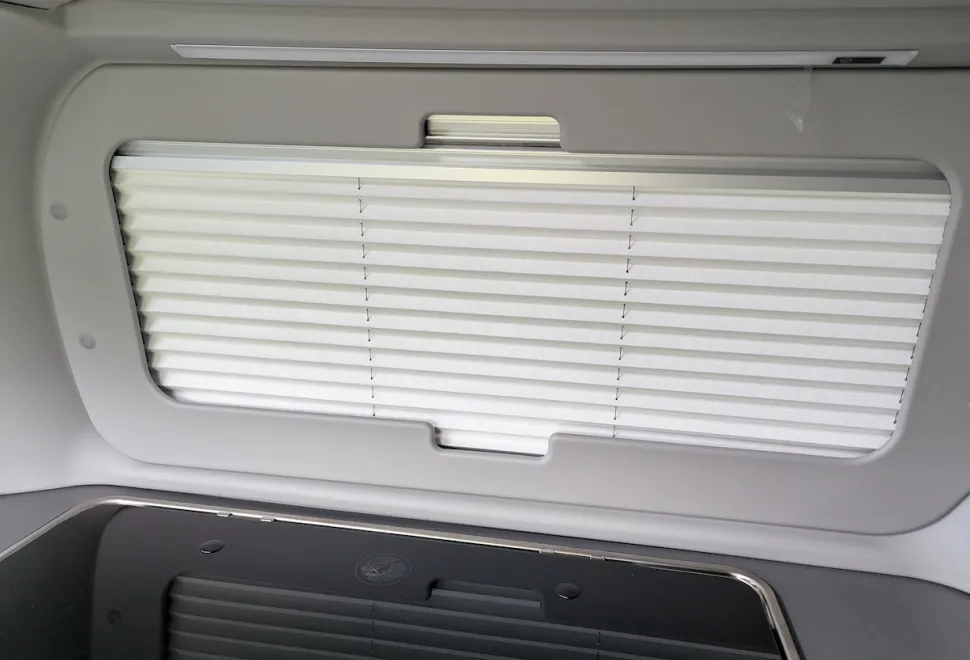
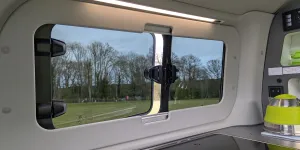
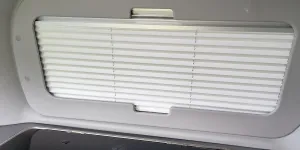
Elsewhere, most of the windows have stick-on insulated covers for night-time, rather than fitted blinds or curtains – a bit laborious when you want to go to bed. The exception is the kitchen window, which has a cassette blind and flyscreen. The window here (and on the sliding door opposite) has a hinged opening section which provides some ventilation, although not as much as if it slid open.
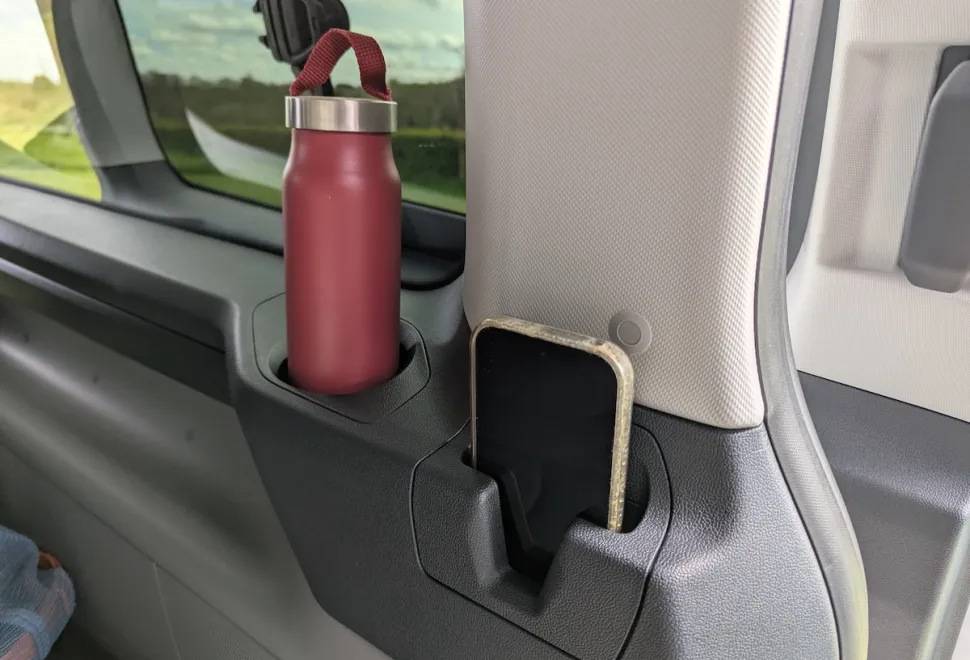
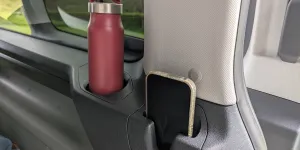
Illumination comes from two dimmable LED strip lights in the base of the roof bed. These are fine for lighting up the living area, but disappointingly there’s no localised lighting at the head end of the downstairs bed. That may well be a way to keep costs down, but there are other nice touches in the habitation area such as a cup or bottle holder, a slot for your phone and a rear speaker.
Although there are no factory options as such, you can upspec your P12+ with various dealer-supplied accessories. These include a removable carpet for the living area (£299), a towbar (£995), a 200W solar panel (£899), a bike rack (£657), a Thule roll-out awning (£1,195) and a Vango drive-away tailgate awning for £575.
Thanks to
Find your perfect campervan
We have hundreds of campervans in our For Sale section. Search for the campervan of your dreams here by selecting the budget to suit, the berths you need and the brands you like.
Our Verdict
The Panama P12+ hits the sweet spot between price and practicality, offering a good spec for £64k, including automatic transmission, a sliding seat and diesel heating. The extra length might rule it out as a daily driver but the lower roof height certainly improves everyday usability. A few cost-saving omissions are noticeable but, overall, the P12+ delivers a great package.
Disadvantages


