
East Neuk Picassette
Image
Image
Image
Image
Image
Image
Image
Image
Image
Description
PRICE FROM £9,995 PRICE AS TESTED £9,995 OPTIONS FITTED None BERTHS/TRAVEL SEATS (INC DRIVER) 2/5 DIMENSIONS 4.90m L, 1.67m W, 1.94m H INTERIOR HEIGHT Roof raised (max) 2.27m, roof lowered (in pod) 1.53m MAXIMUM WEIGHT 1485kg PAYLOAD 305kg
Key Features
Model Year
2013
Product Class
Rising Roof
Product Model Base
Citroën Xsara
Price from (£)
£9995
Length (m)
4.90
Berths
2
Belted seats
5
Main Layout
Campervan
Full Review
CITROËN are renowned for weird and wonderful car designs – witness the practical 2CV, corrugated-sided H-van, the svelte DS, the storming Maseratiengined SM (with swivelling headlights 30 years before the Germans ‘invented’ them).
The Xsara Picasso was less outrageous (if still styled like nothing else) but proved a firm favourite with the British public, selling many thousands before production finally ceased in 2010.
One such (a 2005 model) had travelled just 5,000 miles before arriving in the yard of East Neuk Campervans, in the Fife coastal town of Anstruther.
East Neuk (ENC) employ their own glass-fibre specialist that makes their own GRP roofs for the Fifer Touring S, so developing the moulds for a rising-roof, and pod to attach to the Picasso’s rear, held no fears.
After several months a unique campervan emerged, and was placed on the company’s forecourt and website priced at just £9,995.
OUSTIDE
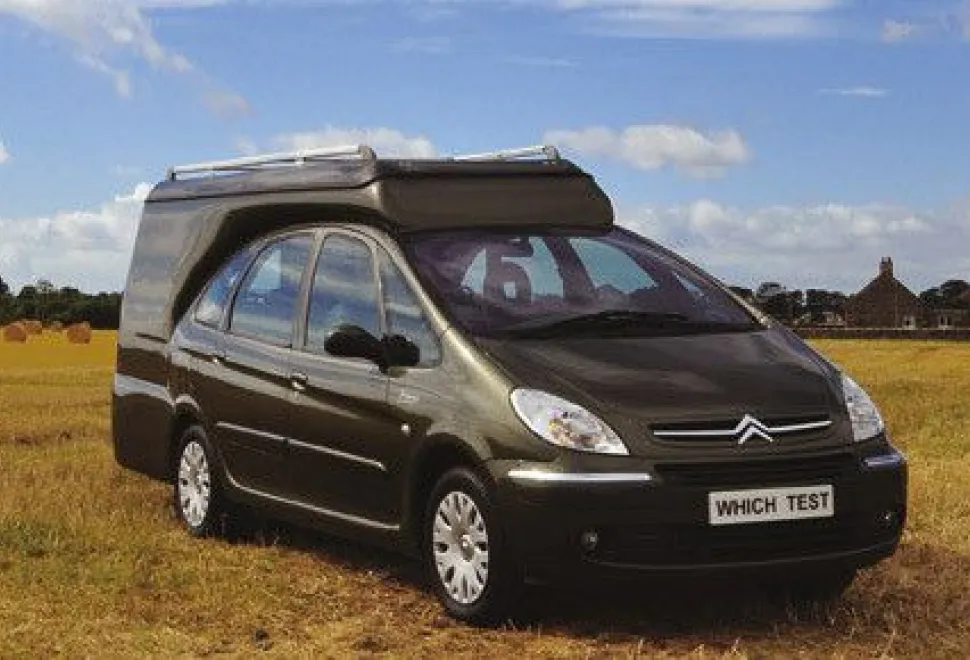
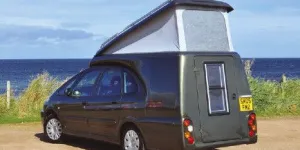
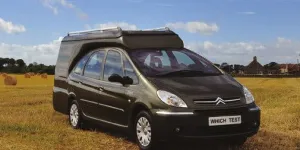
Compared with ENC's gleaming Fifers, the Picassette looks very low, very small – and very, very odd (just right for a Citroën then).
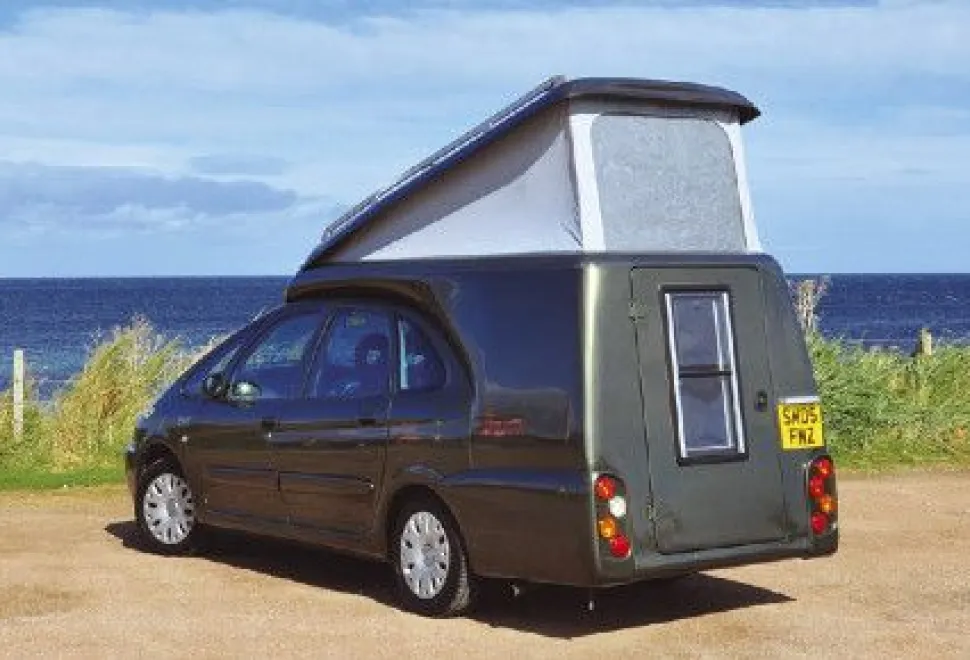
It’s an unusual metallic olive green – a standard, but rare, Citroën colour – and with its rear living pod it reminded us slightly of a hearse, especially having roof bars on the colour-matched rising roof!
A wide (80cm) side-opening rear door contains a vertical, sliding Seitz window with blind. The overhang, at 1.27 metres (just 26 per cent of the total vehicle length) was quite acceptable - but it is low-slung.
The Picasette is not a thing of beauty, but closer inspection revealed the GRP to be well-made and finished, very neatly faired-in, and the bodywork of the donor Picasso was unblemished, belying its age.
ON THE ROAD
How would it drive, we wondered, with the additional weight beyond the back axle?
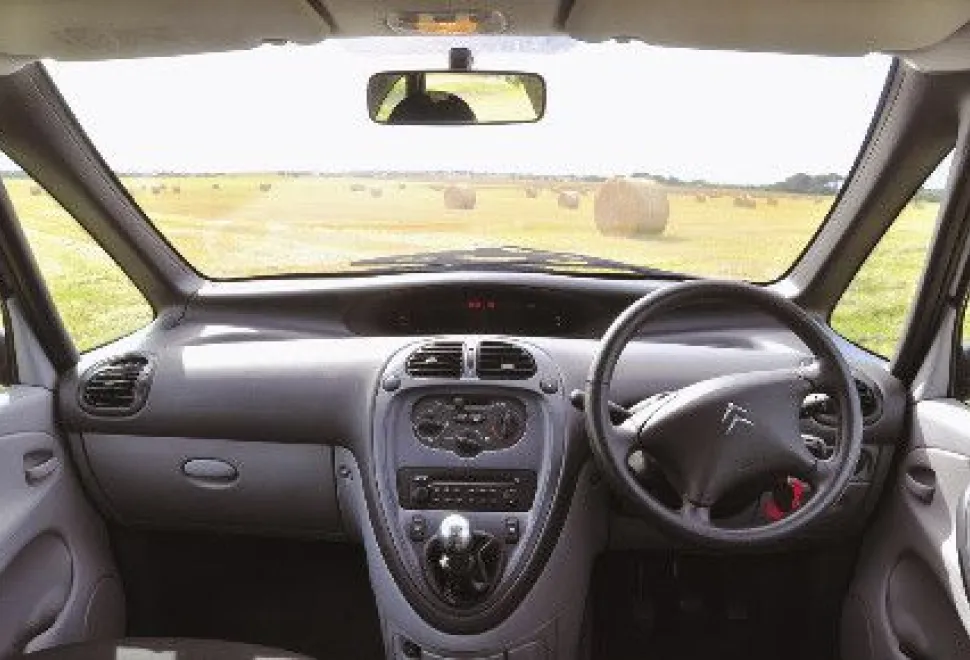
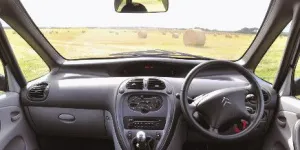
Visibility is good, with narrow A-pillars and a steeply-angled, streamlined windscreen – though there’s no view of the bonnet beyond.
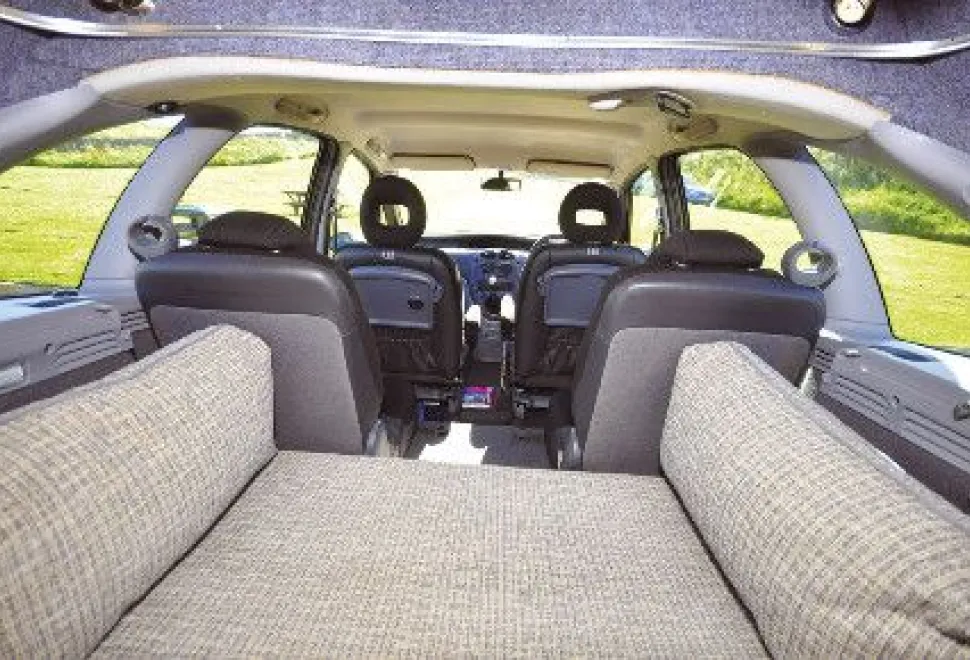
The comfortable front seats are quite large, and there’s a fascia-mounted five-speed gearshift and handbrake between the seats. Citroën’s quirky instrument panel sits centrally, high on the fascia – the large digital speedometer is brilliant, though other information is less distinct.
Door mirrors are small but through the rear door window there’s reasonable visibility, though ENC (as in all their motorhomes) have also installed reversing sensors.
Along narrow lanes the slimness of this vehicle was reassuring, and we were pleased with how the suspension carried the extra bodywork – like most Citroën cars, it was soft and supple but, surprisingly, didn’t wallow.
INSIDE
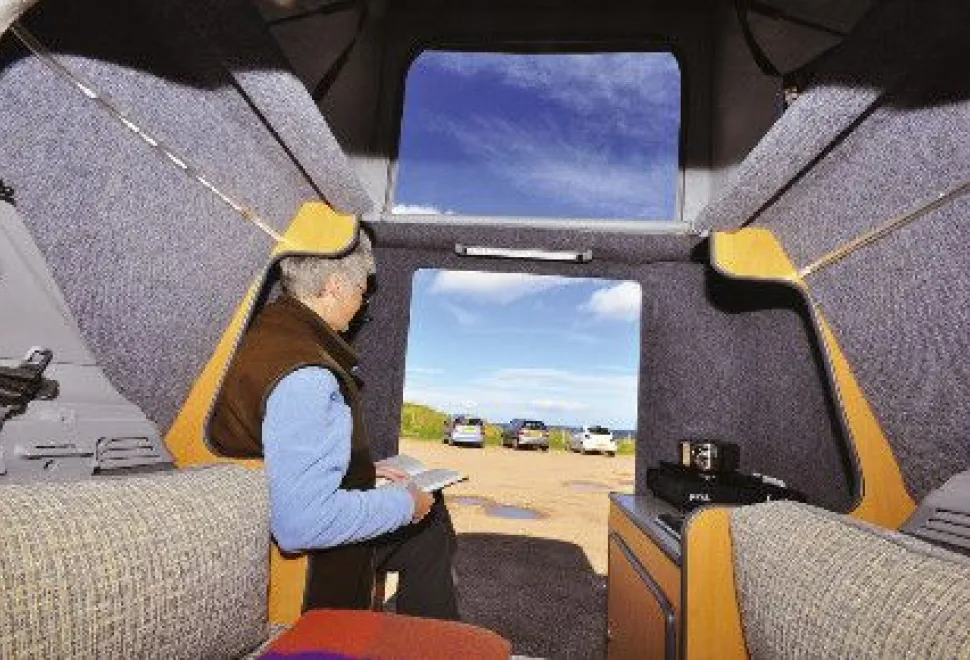
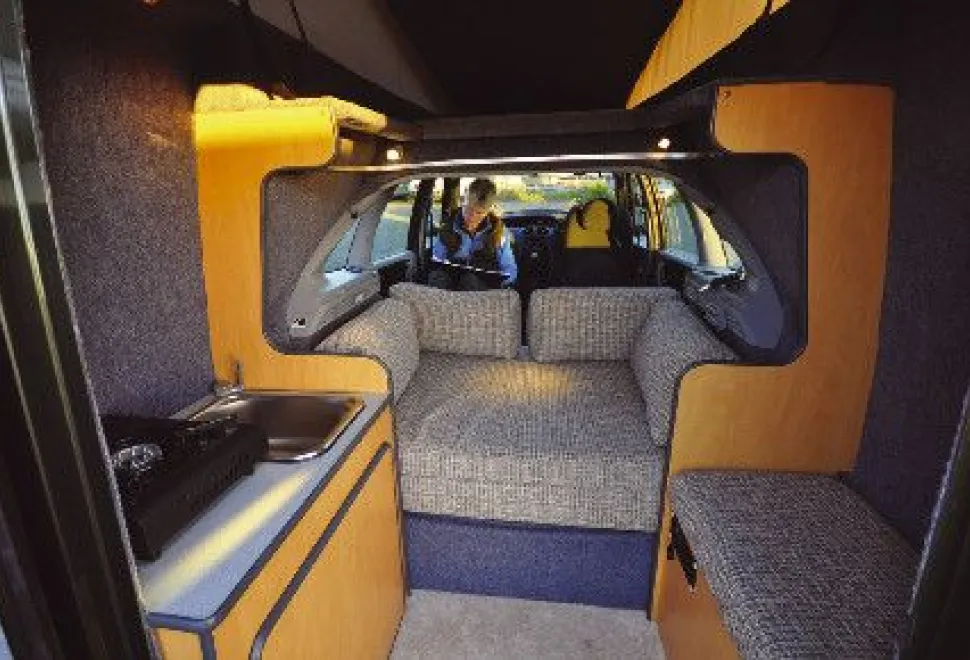
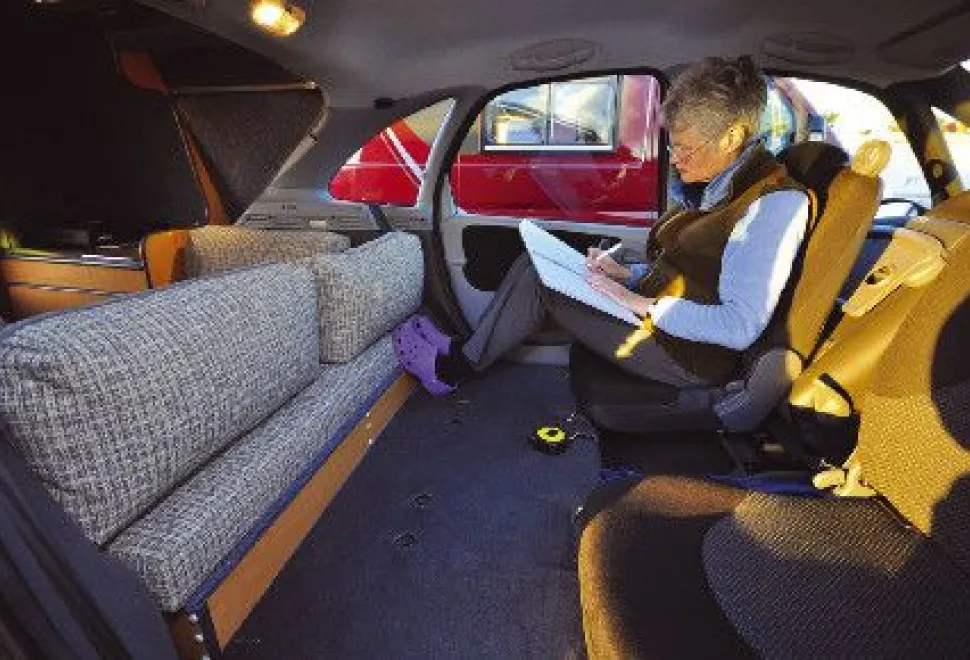
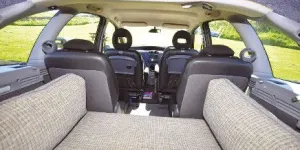
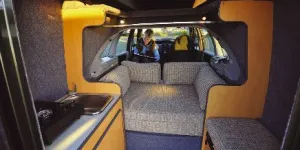
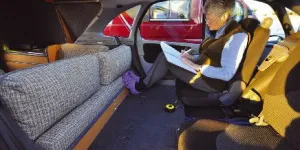
The rear door affords access to a low, vinyl-covered floor with inward-facing seat on the offside, under which lives a 75Ah leisure battery and removable plug-in coolbox, with Zig power unit and 12V socket on the seat front.
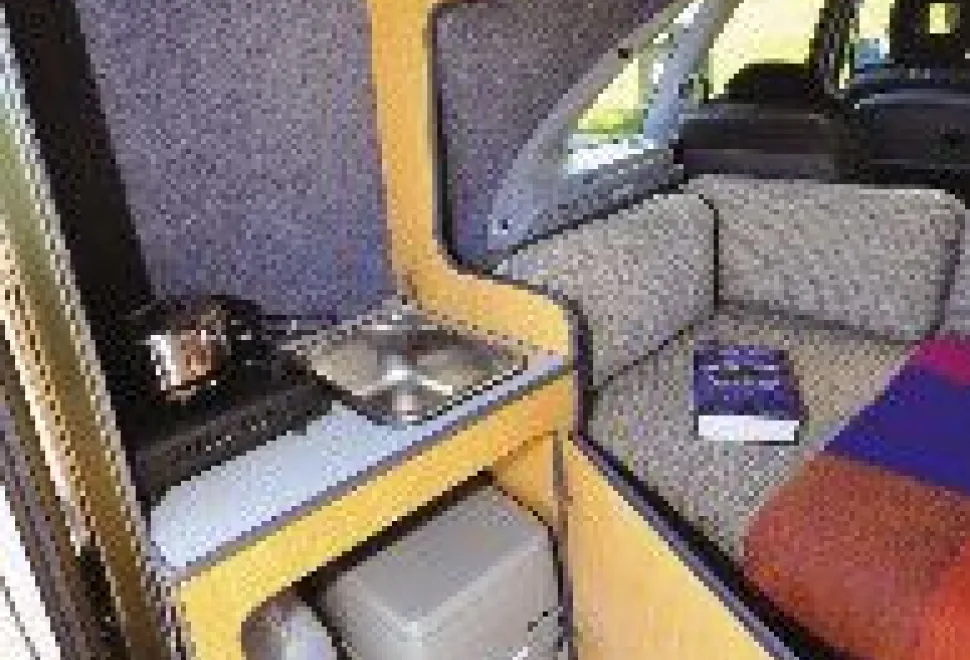
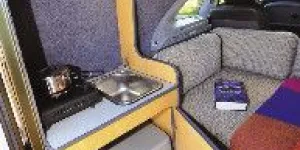
On the nearside is a tiny kitchen unit with stainless-steel sink and tap, its 10-litre water carrier and pump sharing the cupboard beneath with a small Porta Potti.
Waste water drains into a bucket – a low one, as the ’van’s rear dips groundwards when anyone occupies the ‘pod’.
Cooking is on a portable, single-burner gas unit which sits on the worksurface alongside the sink.
THE ROOF
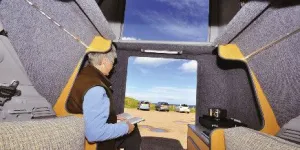
The front-hinged roof is secured by straps – when released, it rises easily on gas struts, giving 2.27 metres of standing room, with a large mosquito-netted zipped rear window.
Side handles make it quite easy to retract; just ensure the fabric is tucked within the roof before completing the exercise.
The rear-most roof-base section slides forward, affording simple access via the kitchen work surface.
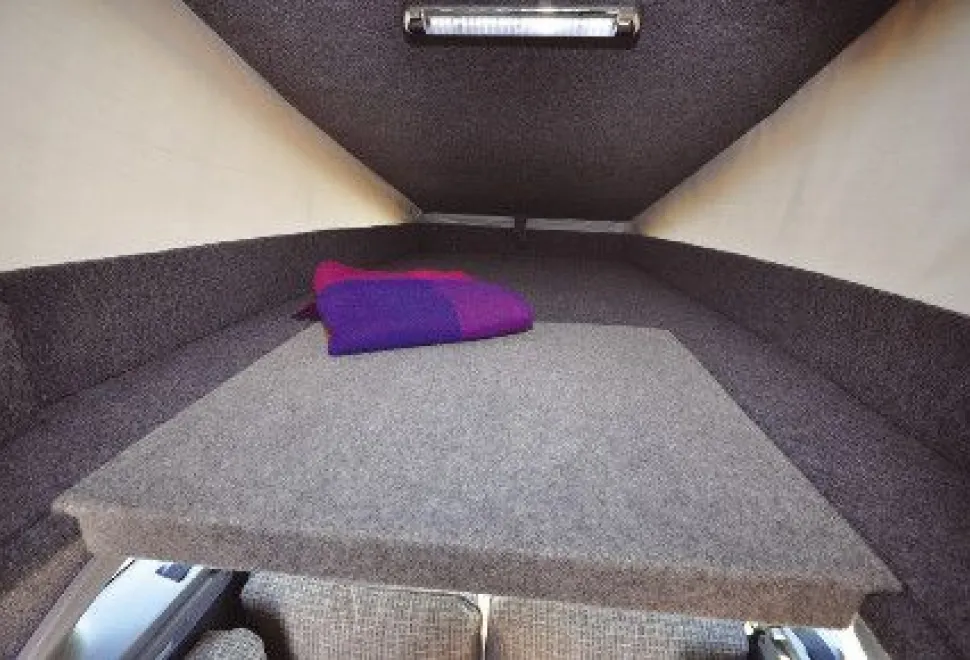
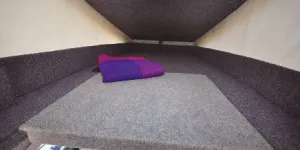
The bed area is large – 2.04-m by 1.14m – but there’s no mattress as yet, and foot-room at the front would be marginal.
As always with a front-hinged elevating roof, you enter head first, then have to swivel round to lie feet-forwards – easy for one person; a potential bruising experience for two unless you’re careful with your clodhoppers! Illumination is good, from two ceiling-mounted LED strip lights.
IN SUMMARY
The Picasette is a tiny two-person camper, with basic facilities. It has no mains hook-up and no heater, plus only moderate storage and bijou cooking and ablution facilities. But – and it’s a big but – it can sleep two, or potentially, with slight modifications, even four.
The Xsara Picasso was less outrageous (if still styled like nothing else) but proved a firm favourite with the British public, selling many thousands before production finally ceased in 2010.
One such (a 2005 model) had travelled just 5,000 miles before arriving in the yard of East Neuk Campervans, in the Fife coastal town of Anstruther.
East Neuk (ENC) employ their own glass-fibre specialist that makes their own GRP roofs for the Fifer Touring S, so developing the moulds for a rising-roof, and pod to attach to the Picasso’s rear, held no fears.
After several months a unique campervan emerged, and was placed on the company’s forecourt and website priced at just £9,995.
OUSTIDE
Compared with ENC's gleaming Fifers, the Picassette looks very low, very small – and very, very odd (just right for a Citroën then).
It’s an unusual metallic olive green – a standard, but rare, Citroën colour – and with its rear living pod it reminded us slightly of a hearse, especially having roof bars on the colour-matched rising roof!
A wide (80cm) side-opening rear door contains a vertical, sliding Seitz window with blind. The overhang, at 1.27 metres (just 26 per cent of the total vehicle length) was quite acceptable - but it is low-slung.
The Picasette is not a thing of beauty, but closer inspection revealed the GRP to be well-made and finished, very neatly faired-in, and the bodywork of the donor Picasso was unblemished, belying its age.
ON THE ROAD
How would it drive, we wondered, with the additional weight beyond the back axle?
Visibility is good, with narrow A-pillars and a steeply-angled, streamlined windscreen – though there’s no view of the bonnet beyond.
The comfortable front seats are quite large, and there’s a fascia-mounted five-speed gearshift and handbrake between the seats. Citroën’s quirky instrument panel sits centrally, high on the fascia – the large digital speedometer is brilliant, though other information is less distinct.
Door mirrors are small but through the rear door window there’s reasonable visibility, though ENC (as in all their motorhomes) have also installed reversing sensors.
Along narrow lanes the slimness of this vehicle was reassuring, and we were pleased with how the suspension carried the extra bodywork – like most Citroën cars, it was soft and supple but, surprisingly, didn’t wallow.
INSIDE
The rear door affords access to a low, vinyl-covered floor with inward-facing seat on the offside, under which lives a 75Ah leisure battery and removable plug-in coolbox, with Zig power unit and 12V socket on the seat front.
On the nearside is a tiny kitchen unit with stainless-steel sink and tap, its 10-litre water carrier and pump sharing the cupboard beneath with a small Porta Potti.
Waste water drains into a bucket – a low one, as the ’van’s rear dips groundwards when anyone occupies the ‘pod’.
Cooking is on a portable, single-burner gas unit which sits on the worksurface alongside the sink.
THE ROOF
The front-hinged roof is secured by straps – when released, it rises easily on gas struts, giving 2.27 metres of standing room, with a large mosquito-netted zipped rear window.
Side handles make it quite easy to retract; just ensure the fabric is tucked within the roof before completing the exercise.
The rear-most roof-base section slides forward, affording simple access via the kitchen work surface.
The bed area is large – 2.04-m by 1.14m – but there’s no mattress as yet, and foot-room at the front would be marginal.
As always with a front-hinged elevating roof, you enter head first, then have to swivel round to lie feet-forwards – easy for one person; a potential bruising experience for two unless you’re careful with your clodhoppers! Illumination is good, from two ceiling-mounted LED strip lights.
IN SUMMARY
The Picasette is a tiny two-person camper, with basic facilities. It has no mains hook-up and no heater, plus only moderate storage and bijou cooking and ablution facilities. But – and it’s a big but – it can sleep two, or potentially, with slight modifications, even four.
Read the full review in the December 2012 issue of Which Motorhome
Our Verdict
It’s that unbelievably low price that makes the Picassette so appealing – especially compared with other £10k motorhomes!
Advantages
Incredible price
Good-quality GRP pod
Drives just like a compact car
Below 2m height
Disadvantages
Limited camping kit on board
Looks a bit odd


